

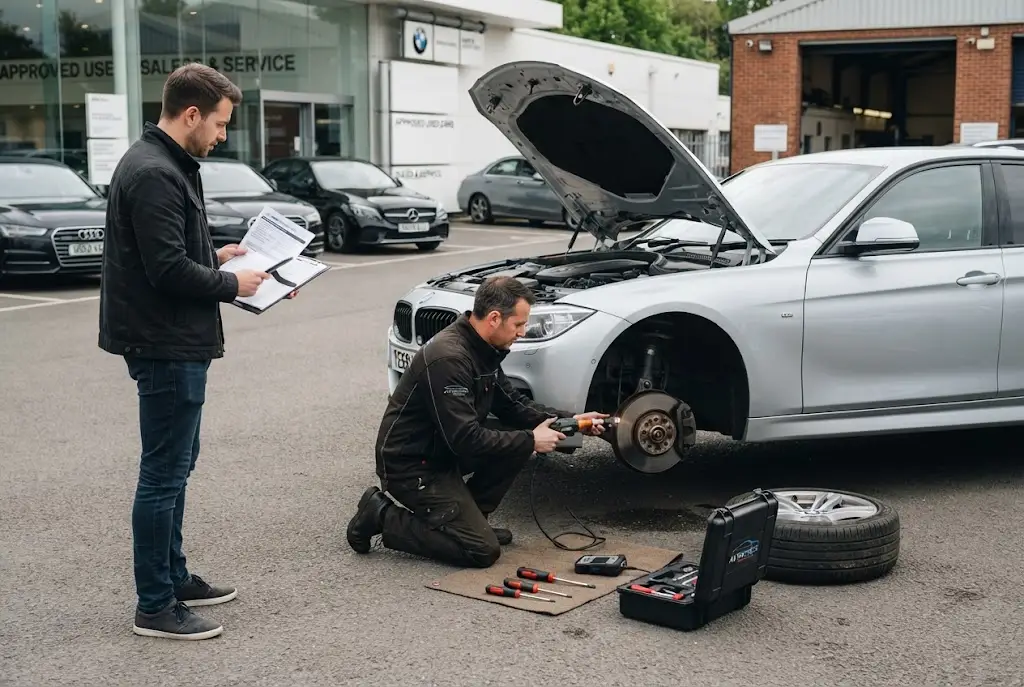
A vehicle history check is an important step when buying a used car in the UK. A vehicle may look clean, drive well and appear reasonably priced, yet its previous history could reveal outstanding finance, recorded mileage issues, insurance write-off history or other information that affects its value and suitability.
A history check should not replace a physical inspection or test drive. Instead, it works alongside paperwork checks, MOT records, service information and a professional used car inspection to give you a clearer picture before you commit to a purchase.
What Is a Vehicle History Check?
A vehicle history check is a report that provides information about a car’s background using its registration and other available vehicle data. The exact information included depends on the provider and type of check you purchase.
Depending on the service, a report may identify issues such as outstanding finance, insurance write-offs, stolen vehicle records, mileage discrepancies, previous registration details and import or export information.
This information can be particularly valuable when buying privately or when a vehicle is being offered at a price that seems unusually attractive.
Why a Vehicle History Check Matters
A used car is more than its current appearance. Previous owners, repairs, accidents, servicing and changes in mileage can all affect its condition and value.
For example, a vehicle that has been written off may have been repaired and returned to the road. That does not automatically mean it is unsafe, but it is important information that should be understood before buying.
Likewise, outstanding finance can create complications because the vehicle may still be subject to a finance agreement. Checking the background before exchanging money can therefore reduce the risk of an unpleasant surprise.
GOV.UK recommends checking a used vehicle’s details, MOT history, recalls and documentation before buying. The official service also advises checking that the information supplied by the seller matches the information held by the relevant authorities.
What Does a Vehicle History Check Show?
There is no single report that contains every piece of information about every vehicle. Different providers offer different levels of data, so check exactly what is included before purchasing a report.
Outstanding Finance
A finance check can indicate whether money is still owed against the vehicle. This is particularly important when buying a car that is being sold before an existing finance agreement has been settled.
Ask the seller for an explanation if a report identifies outstanding finance. Do not simply assume that the issue will disappear after you buy the vehicle.
Insurance Write-Off History
A history report may identify whether an insurer has previously recorded the vehicle as a write-off. The classification and circumstances can vary, so the report should be considered alongside an independent inspection and the vehicle’s repair documentation where available.
Stolen Vehicle Records
Some vehicle history checks can identify whether a car has been recorded as stolen. This is one reason why checking the vehicle before paying the seller is important.
Mileage Information
Recorded mileage can provide useful clues about how a vehicle has been used over time. A sudden unexplained change in mileage or inconsistent records should be investigated rather than ignored.
However, mileage information from a history report should be considered alongside MOT records, service documentation and the physical condition of the vehicle.
Import and Export Information
Some reports can identify whether a vehicle has previously been imported or exported. This may be relevant when checking the car’s background, specification and documentation.
Check the MOT History Separately
A vehicle history check is not the same as checking the government’s MOT database. You should use the official MOT service as part of your research before buying.
GOV.UK allows buyers to view previous MOT results, recorded mileage, test dates and failures for eligible vehicles. For cars tested in England, Scotland and Wales, the online record can include information about where tests were carried out and which components failed or had minor problems.
This can help you identify patterns that deserve further investigation. For example, repeated MOT advisories or failures involving the same component may indicate maintenance issues that should be discussed with the seller.
Do not focus only on whether the car currently has a valid MOT. A current certificate does not provide a complete assessment of the vehicle’s overall condition.
What Is a Service History Check?
A service history check focuses on the vehicle’s maintenance records rather than its broader legal and ownership history.
Ask to see available service invoices, digital service records, service book entries and evidence of major maintenance work. Depending on the vehicle, this could include items such as timing belt replacement, brake work, tyre replacement or other manufacturer-recommended maintenance.
A complete service history is useful, but buyers should still check whether the recorded work matches the vehicle’s age, mileage and manufacturer’s recommended maintenance schedule.
If records are incomplete, ask the seller why. Missing paperwork does not automatically mean the car has been poorly maintained, but it does mean you have less evidence to work with.
Why You Should Arrange a Vehicle Inspection
A history report tells you about recorded information. It does not physically examine the car sitting in front of you.
A professional vehicle inspection can assess mechanical, structural and cosmetic areas that may not be obvious from photographs or paperwork. The exact inspection depends on the provider and package selected.
The AA currently offers pre-purchase vehicle inspections designed to assess a used car’s condition before purchase, with different inspection options available. Its guidance highlights issues such as accident damage, poor repairs, corrosion, worn brakes and tyres, leaks and mechanical concerns as examples that an inspection can help identify.
This can be particularly useful if the vehicle is located far away, you are buying privately, or you do not have the mechanical knowledge to assess the car yourself.
What Is an AA Car Inspection?
An AA car inspection is a pre-purchase assessment that can help buyers evaluate the condition of a prospective used vehicle.
The AA offers different inspection options, and the checks included vary by package. Its current vehicle inspection service can cover areas such as exterior condition, fluid levels, controls, lights and tyres, with more comprehensive options providing additional checks and photographs.
If you are considering an AA inspection, check the current package details carefully to understand what the engineer will and will not assess.
What Is an RAC Inspection?
An RAC inspection is another option for buyers who want a professional assessment before purchasing a used vehicle.
The RAC currently offers different inspection levels. Its inspection services can include mechanical and structural checks, underbody examination, interior and bodywork checks, road testing and engineer reporting, depending on the package selected.
The RAC also recommends combining a vehicle inspection with a history check because the two services provide different types of information. Its guidance lists areas such as outstanding finance, write-offs, stolen status, mileage and import or export information among the checks available through its history service.
Vehicle History Check vs Vehicle Inspection
These two checks serve different purposes, so they should not be treated as alternatives.
- Vehicle history check: focuses on recorded background information about the vehicle.
- MOT history: shows previous MOT results and recorded mileage information available through the official government service.
- Service history: provides evidence about maintenance and servicing carried out on the vehicle.
- Vehicle inspection: assesses the vehicle’s physical, mechanical and structural condition.
- Test drive: gives you an opportunity to experience how the vehicle performs and identify obvious driving issues.
Using several of these checks together gives you a more complete buying process than relying on any single source.
What Is a Pre-Purchase Inspection?
A pre-purchase inspection is an examination carried out before you buy a vehicle. It is particularly useful when you are seriously considering a specific used car and want an independent assessment of its condition.
Ideally, the inspection should happen before you make an irreversible payment. If the car is located some distance away, an inspection can also save you a long journey if significant problems are discovered.
Ask the inspection provider what areas are covered and whether the report includes photographs, road testing, mechanical checks or structural assessment. Packages vary, so do not assume that every inspection covers the same areas.
What Does a Car Inspection Report Tell You?
A car inspection report records the findings of the inspection and can help you understand the condition of the vehicle at the time it was examined.
Depending on the service, the report may identify visible bodywork problems, mechanical faults, tyre condition, suspension concerns, warning lights, leaks or other issues.
Read the report carefully rather than looking only for an overall pass or fail impression. Some defects may be relatively inexpensive to address, while others could significantly change whether the car represents good value.
If an inspection identifies problems, ask the seller whether they are willing to repair them or adjust the price. Alternatively, you may decide that walking away is the better option.
How to Check a Used Car Before Buying
A sensible buying process can be broken into several stages.
1. Collect the Basic Details
Ask the seller for the registration number, make, model, mileage and available MOT information. GOV.UK recommends obtaining these details before seeing the vehicle and checking that they match official information.
2. Check the Vehicle History
Run an appropriate history report before spending time or money travelling to see the vehicle. Investigate any finance, write-off, theft, mileage or import/export information that appears.
3. Review MOT Records
Compare MOT dates, mileage and previous failures or advisories. Look for patterns that may require further explanation.
4. Review the Service Records
Ask to see service invoices and other maintenance documentation. Check whether major maintenance appears consistent with the car’s age and mileage.
5. Inspect the Vehicle
Examine the bodywork, paint, tyres, lights, glass, interior and engine bay. Look for signs of accident repairs, corrosion, fluid leaks or neglected maintenance.
6. Take a Test Drive
Drive the car in different conditions where possible. Pay attention to steering, braking, clutch or automatic transmission operation, unusual noises, warning lights and how the vehicle behaves on the road.
7. Consider an Independent Inspection
If you are uncertain about the vehicle’s condition, arrange a professional inspection before completing the purchase.
Red Flags to Investigate Before Buying
Some warning signs deserve additional attention rather than an immediate purchase decision.
- The seller refuses to provide the registration number.
- The mileage does not appear consistent across available records.
- MOT history shows repeated serious failures without a clear explanation.
- Service records are missing despite claims of a complete service history.
- There are signs of significant accident repairs.
- The vehicle history report identifies outstanding finance.
- The price is substantially below comparable vehicles without an obvious reason.
- The seller pressures you to make an immediate payment.
- The vehicle identification details do not match the documentation.
None of these points automatically proves that a vehicle is unsuitable. They simply indicate that you should investigate further before proceeding.
Should You Get a Vehicle History Check From a Dealer?
If you are buying from one of the car dealers you have compared, ask what checks and preparation have already been completed.
A dealer may provide its own vehicle history documentation, but you should still understand what the report covers and when it was generated. If you have concerns, consider obtaining independent checks rather than relying entirely on the seller’s description.
The same principle applies when buying through an online marketplace. A detailed advert can help you shortlist a vehicle, but it should not replace your own due diligence.
Can a Vehicle History Check Guarantee a Good Car?
No. A history check is a valuable research tool, but it cannot guarantee that a vehicle is mechanically sound or free from every possible problem.
Some defects may never have been recorded in the databases used by a history provider. Mechanical wear can also develop after the information in a report was recorded.
That is why the strongest approach combines history data with MOT records, service documentation, physical inspection and a test drive.
Final Thoughts on Vehicle History Checks
A vehicle history check can reveal important information that may not be visible when you first look at a used car. Finance records, write-off history, stolen markers, mileage information and other data can all help you make a more informed decision.
However, a history report is only one part of the process. Check the official MOT history, review the service records, inspect the vehicle and consider an independent pre-purchase inspection when appropriate.
Whether you are buying from a private seller, online marketplace or dealership, taking time to verify the car before paying can help you identify potential problems early. A few additional checks can be far less costly than discovering a major issue after the purchase.
