

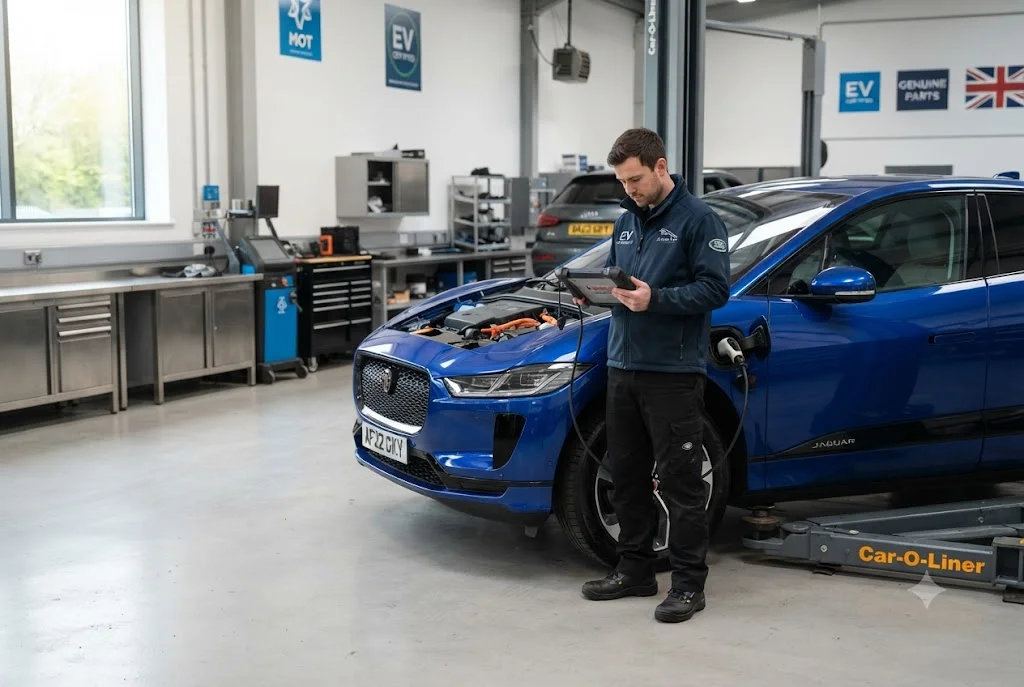
EV servicing is an important part of keeping an electric car safe, efficient and reliable throughout its working life. Although electric vehicles have fewer moving parts than petrol or diesel cars, they still need regular inspections, maintenance and repairs. Brakes, tyres, suspension, steering, cooling systems, charging equipment and high-voltage components all need appropriate attention.
For UK drivers, choosing the right garage is particularly important because electric vehicles use technology and high-voltage systems that require suitable knowledge, equipment and safety procedures. A routine service can also identify developing problems before they become expensive repairs.
What Does EV Servicing Include?
EV servicing covers a range of checks designed around the specific vehicle and its manufacturer service schedule. The exact requirements vary between makes and models, so drivers should always check the vehicle handbook and recommended maintenance intervals.
Unlike a conventional petrol or diesel service, an electric car does not normally require engine oil changes, spark plug replacement or exhaust-system maintenance. However, that does not mean an EV can simply be driven without regular servicing.
Typical checks may include:
- Brake condition and operation
- Tyre condition, pressure and tread
- Steering and suspension components
- Battery and charging-system inspection
- Coolant and thermal-management systems where fitted
- Lights and electrical systems
- Windscreen washers and wipers
- Cabin or pollen filter replacement where required
- Diagnostic checks for electronic faults
- Inspection for warning lights or stored fault codes
Some electric cars use regenerative braking extensively, which can reduce the use of conventional friction brakes. Even so, brake components still require inspection because corrosion, wear and other problems can develop over time.
Why Regular EV Servicing Matters
Regular EV servicing helps identify problems before they affect safety, reliability or day-to-day driving. Electric vehicles depend on several interconnected electronic and mechanical systems, so a small warning sign should not automatically be ignored.
Professional maintenance can also help owners understand the condition of important components. For example, diagnostic equipment may identify faults that are not obvious during a basic visual inspection.
Regular maintenance is also useful when a vehicle is approaching the end of a warranty period or when an owner is preparing to sell it. A clear service history can demonstrate that the car has been properly maintained.
EV Servicing and High-Voltage Systems
One of the biggest differences between electric vehicles and conventional cars is the presence of a high-voltage propulsion system. The battery, cables and associated components require appropriate safety procedures.
The Driver and Vehicle Standards Agency notes that electric and hybrid vehicles can contain high-voltage systems and that technicians should take care around high-voltage components and cabling. Its guidance also advises treating high-voltage batteries and associated components as energised when carrying out relevant work. GOV.UK guidance for MOT testers provides further information about electric and hybrid vehicle safety.
This is why owners should avoid attempting repairs involving high-voltage components without the necessary training and equipment. A qualified technician can follow the correct isolation and inspection procedures for the vehicle.
Choosing the Right EV Mechanics
Finding suitable EV mechanics is one of the most important decisions when arranging electric vehicle maintenance. Not every general garage will offer the same level of EV expertise, so it is sensible to ask what equipment and training the workshop has before booking.
When comparing garages, consider whether the workshop:
- Regularly works on electric vehicles
- Has technicians trained to work safely with EV systems
- Uses appropriate diagnostic equipment
- Can inspect and repair EV-specific components
- Can work with your particular make and model
- Provides clear service information and repair estimates
- Follows the manufacturer’s recommended maintenance requirements where appropriate
A garage that regularly handles electric cars is more likely to understand the differences between EV models and the diagnostic processes required for modern electric drivetrains.
What EV Garages Check During a Service
EV garages may use a combination of visual inspections, diagnostic scans and physical checks during a service. The inspection should be appropriate for the vehicle’s age, mileage, condition and manufacturer recommendations.
Tyres are particularly important because electric vehicles can be relatively heavy and deliver strong instant torque. Correct tyre pressure, suitable tread and good overall tyre condition are essential for safe handling.
Steering and suspension should also be checked. Worn components can affect handling, tyre wear and vehicle stability. If the car has developed uneven tyre wear or the steering no longer feels straight, an inspection may identify an alignment-related issue.
For drivers experiencing handling problems, a specialist wheel alignment service can be considered alongside normal EV maintenance.
Electric Car Mechanic vs General Garage
An electric car mechanic needs to understand more than the traditional mechanical systems found on petrol and diesel vehicles. EV work can involve electric motors, high-voltage batteries, charging systems, electronic control units, thermal management and sophisticated diagnostic software.
That does not mean every routine task requires an EV specialist. Basic items such as tyres, wiper blades and some conventional brake components may be handled by many competent automotive workshops. However, work involving high-voltage systems or complex EV diagnostics should be carried out by appropriately trained professionals.
For this reason, it is useful to separate routine maintenance from specialist repairs when choosing a workshop.
EV Battery Maintenance and Health
The traction battery is one of the most valuable components in an electric vehicle, so battery condition naturally concerns many owners. Battery performance can change over time, but drivers should not assume that every reduction in range means the battery requires replacement.
Range can be affected by temperature, driving style, speed, heating or air conditioning use, tyre pressure, payload and other conditions. A diagnostic assessment may be more useful than relying solely on the estimated range displayed on the dashboard.
During servicing, technicians may also inspect accessible battery-related components and charging equipment for visible signs of damage. High-voltage components should only be handled using appropriate procedures and equipment.
Common EV Repairs and Maintenance Issues
EV repair specialists can deal with a wide range of problems, depending on the vehicle and the technician’s capabilities. Some repairs are similar to those found on conventional cars, while others are unique to electric drivetrains.
Common areas that may require attention include:
- Charging faults
- 12-volt battery problems
- Brake wear or corrosion
- Suspension faults
- Tyre damage or uneven wear
- Warning lights and electronic faults
- Cooling-system issues
- Charging-port problems
- Electrical and communication faults
- Problems with sensors or electronic control systems
A warning message should not automatically be treated as a major battery failure. Proper diagnostics are important because the underlying cause may involve a smaller electrical, software or auxiliary-system problem.
EV Servicing, Tyres and Brakes
Electric vehicle maintenance extends well beyond the battery. Tyres, brakes and suspension remain essential safety components and deserve regular attention.
Drivers who notice vibration, uneven tyre wear or steering that pulls to one side should arrange an inspection rather than continuing to drive the vehicle indefinitely. Depending on the problem, the garage may recommend tyre replacement, balancing, tracking or alignment work.
For broader tyre-related requirements, drivers can also explore tyre services covering tyre fitting, repairs, balancing and replacement.
Brake inspections are equally important. Regenerative braking can change how frequently friction brakes are used, but the braking system still needs to remain in good condition. GOV.UK’s vehicle safety guidance reminds drivers that they are responsible for ensuring their vehicle remains roadworthy and recommends regular attention to brakes and tyres. GOV.UK’s vehicle safety guidance provides further information for motorists.
How Often Should an Electric Car Be Serviced?
There is no single service interval that applies to every electric vehicle. Manufacturers set different schedules depending on the model, battery technology, mileage and components used.
Some EVs may have longer service intervals than comparable combustion-engine vehicles, while others still require scheduled inspections for specific components. The best approach is to follow the manufacturer’s recommended schedule rather than assuming that an electric car does not need regular maintenance.
Drivers should also arrange an inspection sooner if they notice unusual noises, reduced performance, charging problems, warning messages, brake issues, steering changes or other symptoms.
Can EV Servicing Affect the Manufacturer Warranty?
Warranty terms depend on the manufacturer and the specific vehicle. Owners should therefore check their warranty documentation before choosing where to have scheduled maintenance completed.
It is sensible to keep invoices, service records and diagnostic reports where available. A well-documented maintenance history can make it easier to demonstrate what work has been completed and when.
For owners using a newer EV, service planning can also make maintenance easier to budget for. Some drivers may prefer a structured maintenance package rather than paying for individual services as they arise. This is where car service plans can become relevant.
How to Prepare for an EV Service
Before taking an electric car to a garage, note any changes you have noticed since the previous service. This might include charging difficulties, unusual sounds, dashboard warnings, changes in braking behaviour or reduced efficiency.
It is also useful to provide the technician with information about the vehicle’s recent history. If a warning appeared only once but disappeared later, mention it. Intermittent faults can still provide valuable diagnostic clues.
Take the vehicle’s service information and relevant documentation if requested. If the garage needs specific manufacturer information or diagnostic access, providing the exact model and registration details in advance can help the workshop prepare.
Signs Your EV Needs Professional Attention
Regular servicing is important, but drivers should not wait for the next scheduled appointment if a significant problem develops. Professional advice may be appropriate if you notice:
- A persistent dashboard warning
- Unexpected charging interruptions
- Unusual electrical smells or visible damage
- Sudden changes in vehicle performance
- Unusual brake noises or reduced braking performance
- Steering vibration or pulling
- Repeated charging-system faults
- Visible damage around charging cables or battery areas
If high-voltage cables or components appear damaged, avoid attempting to inspect or repair them yourself. The vehicle should be assessed by a suitably qualified professional.
Making EV Servicing Part of Your Ownership Routine
Electric cars can offer a different maintenance experience from conventional vehicles, but they still need responsible care. The reduced number of traditional engine components does not remove the need to inspect tyres, brakes, steering, suspension, charging equipment and electrical systems.
Choosing experienced EV repair specialists can provide greater confidence when specialist diagnostics or high-voltage work is required. At the same time, routine checks and good driving habits can help owners identify potential problems early.
For UK electric vehicle owners, the simplest approach is to follow the manufacturer’s service schedule, keep the car roadworthy, respond promptly to warning signs and use appropriately equipped professionals for specialist work. With the right maintenance routine, EV owners can protect safety, reliability and the long-term condition of their vehicle.
