

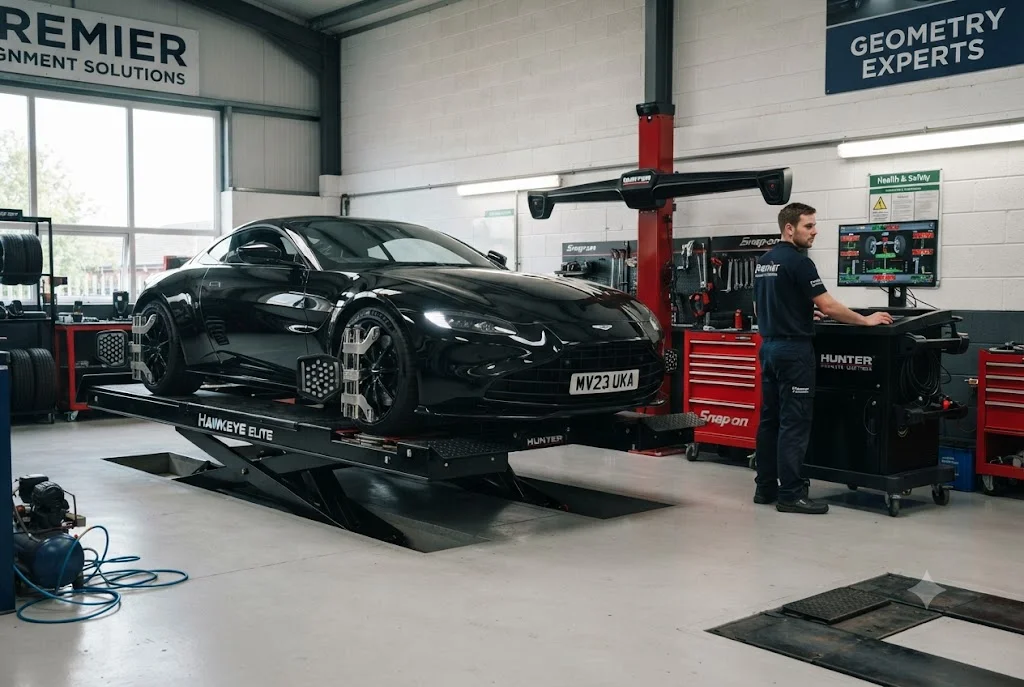
Wheel alignment is an important part of vehicle maintenance that helps keep your car stable, predictable and safe on the road. Correct alignment allows the wheels to sit at the angles specified by the vehicle manufacturer, helping the tyres make proper contact with the road and reducing unnecessary wear.
If your car pulls to one side, the steering wheel appears off-centre or your tyres are wearing unevenly, alignment could be one of the areas that needs checking. Understanding how alignment works, what tracking means and when to arrange a specialist inspection can help UK drivers avoid unnecessary tyre wear and handling problems.
What Is Wheel Alignment?
Wheel alignment is the process of checking and adjusting the angles of a vehicle’s wheels so they meet the manufacturer’s specifications. These angles influence how the tyres sit against the road and how the vehicle responds to steering inputs.
Although people often use the terms wheel alignment and tracking interchangeably, modern alignment services can involve more than simply adjusting the front wheels. Depending on the vehicle, technicians may inspect multiple alignment angles across the front and rear axles.
The main alignment measurements commonly considered include:
- Toe
- Camber
- Caster
The precise specifications vary between vehicles. A professional alignment machine compares the car’s measurements with the appropriate specifications before adjustments are made where possible.
Why Wheel Alignment Matters
Correct alignment can contribute to predictable steering, even tyre wear and stable handling. When alignment is outside the recommended range, the tyres may not contact the road as intended.
Misalignment can develop gradually or happen suddenly after an impact. Hitting a pothole, kerb or other road hazard can potentially affect steering or suspension components and change alignment settings.
For this reason, alignment should be considered when a vehicle develops new handling symptoms, particularly after a significant impact.
Common Signs Your Car Needs Alignment
Drivers may notice several symptoms when the wheel alignment is no longer within the appropriate specification. However, these symptoms can also have other causes, so professional inspection is important before assuming alignment is the problem.
Common signs include:
- The car pulls noticeably to the left or right
- The steering wheel is off-centre when driving straight
- Uneven or rapid tyre wear
- The vehicle feels unstable or unusual through corners
- The steering does not feel as precise as before
- Tyres show wear concentrated on particular edges
- The car develops handling changes after hitting a pothole or kerb
If you experience persistent pulling or unusual steering behaviour, do not ignore it. Tyres, suspension, brakes and steering components should also be checked because an alignment reading alone may not explain every handling problem.
Wheel Alignment After Hitting a Pothole
UK roads can expose vehicles to potholes and uneven surfaces, and a strong impact can affect more than the tyre itself. Depending on the severity of the impact, components such as wheels, suspension parts and steering components may be damaged.
If your car hits a significant pothole and you subsequently notice vibration, pulling, an off-centre steering wheel or unusual tyre wear, arrange an inspection.
A technician can check the tyres and wheels first and then determine whether a full alignment check is appropriate. If a suspension or steering component has been bent or damaged, simply adjusting the alignment may not resolve the underlying issue.
What Is Tracking?
Tracking is a commonly used term for checking and adjusting wheel alignment, particularly the toe angle. Many garages use the word tracking when describing a basic alignment service.
However, vehicle alignment technology can measure several different angles. This means drivers should ask the garage exactly what its alignment service includes rather than assuming that every tracking service provides the same level of inspection.
A basic front-wheel tracking adjustment may be appropriate for some vehicles and situations, while others may benefit from a more comprehensive four-wheel alignment check.
Wheel Balancing vs Wheel Alignment
Wheel balancing and alignment address different problems, although drivers sometimes confuse them.
The Wheel balancing involves correcting the distribution of weight around a wheel and tyre assembly. An imbalance can contribute to vibration, particularly at certain speeds.
Alignment, on the other hand, concerns the position and angles of the wheels relative to the vehicle and road. A car can have correctly balanced wheels but still have an alignment problem.
For example, if the steering wheel is off-centre and the vehicle pulls to one side, an alignment inspection may be more relevant. If the main symptom is vibration at particular speeds, wheel and tyre balance should also be investigated.
Drivers experiencing both symptoms may need both services as part of a broader wheel and tyre inspection.
How Wheel Alignment Affects Tyres
Tyres are among the first areas where alignment problems can become visible. Incorrect wheel angles can cause the tread to wear unevenly, reducing the useful life of a tyre.
Instead of wearing evenly across the tread, a misaligned wheel may cause one edge to wear faster than the rest. If the problem continues, the tyre may eventually need replacing earlier than expected.
Regularly checking tyre pressures and inspecting tread condition can help drivers identify unusual wear patterns. GOV.UK also provides guidance for motorists on checking whether their vehicle is safe and roadworthy.
When alignment and tyre problems occur together, a comprehensive tyre services inspection can help determine whether the tyres need repair, balancing, replacement or fitting.
What Is Steering Alignment?
Steering alignment is closely related to wheel alignment because wheel angles influence the way the vehicle responds to steering inputs. Correct alignment helps the car track predictably when the driver is travelling in a straight line.
An off-centre steering wheel does not automatically prove that the alignment is incorrect. The steering system, suspension components, tyre pressures and road surface can all influence how a car feels.
For that reason, a professional workshop should inspect the complete situation rather than simply adjusting one setting based on a driver’s description.
How a Specialist Wheel Alignment Service Works
A specialist wheel alignment service normally begins with an inspection of the vehicle and tyres. The technician may check tyre pressures, tread condition, steering and suspension components before placing the vehicle on an alignment system.
Modern alignment equipment can measure wheel angles and display the results against manufacturer specifications. If adjustment is possible and appropriate, the technician can make the required changes.
The process may involve:
- Checking the vehicle and tyres
- Inspecting steering and suspension components
- Mounting alignment equipment
- Measuring the current wheel angles
- Comparing measurements with vehicle specifications
- Making appropriate adjustments
- Rechecking the measurements
The exact procedure varies depending on the vehicle and alignment equipment used.
How Much Does Wheel Alignment Cost?
Wheel alignment cost varies across the UK and depends on the vehicle, workshop, equipment, location and type of alignment service required. A basic tracking adjustment may cost less than a comprehensive four-wheel alignment.
Additional work can also affect the final price. If the technician identifies worn suspension components, damaged steering parts or a problem with a wheel or tyre, those issues may need to be addressed before accurate alignment can be completed.
When comparing prices, ask what is included. A very low advertised price may represent a limited service, while a more comprehensive package could include measurements for all relevant wheels and a before-and-after report.
Rather than choosing solely on price, consider the workshop’s equipment, technician experience and ability to work with your particular vehicle.
How Often Should You Have Wheel Alignment Checked?
There is no universal interval that requires every car to have an alignment adjustment at a specific mileage. Alignment requirements depend on the vehicle, road conditions, driving habits and condition of steering and suspension components.
Some drivers may only need an alignment check when symptoms appear or after an impact. Others may benefit from checking alignment when replacing tyres or carrying out suspension work.
It is particularly sensible to consider an inspection if you notice uneven tyre wear, steering changes or a vehicle that consistently pulls to one side.
Wheel Alignment and New Tyres
New tyres can improve grip and handling, but fitting new rubber does not automatically correct an alignment problem. If the vehicle’s wheels are misaligned, new tyres can begin developing uneven wear as they are driven.
For this reason, an alignment check can be worthwhile when replacing tyres if there are signs of previous uneven wear or handling problems.
Drivers should also ensure that replacement tyres are correctly fitted and inflated. Proper tyre maintenance and alignment work together to support safe and predictable handling.
Can Poor Alignment Affect Fuel Economy?
Alignment can influence rolling resistance and tyre wear, although fuel consumption depends on many other factors. Driving style, speed, tyre pressures, vehicle load, weather and engine or powertrain efficiency can all have a significant effect.
A vehicle with a noticeable alignment problem may cause tyres to scrub against the road rather than rolling as intended. Correcting the underlying issue can therefore be beneficial for tyre condition and vehicle behaviour.
However, drivers should not expect an alignment adjustment alone to produce a dramatic change in fuel consumption. It is one part of overall vehicle maintenance.
Wheel Alignment for Electric and Hybrid Cars
Wheel alignment is important for electric and hybrid vehicles as well as conventional petrol and diesel cars. These vehicles still depend on tyres, steering and suspension to provide safe handling.
Electric vehicles can also place particular demands on tyres because of their weight and immediate torque delivery. Maintaining correct tyre condition and alignment is therefore an important part of broader EV maintenance.
If you own an electric car, our guide to EV servicing explains the wider maintenance requirements associated with electric vehicles. Hybrid owners can also explore hybrid servicing for information about maintaining electrified vehicles with combustion engines.
What to Ask Before Booking an Alignment Service
Before booking, ask the workshop what type of alignment service it provides and whether it can work with your particular vehicle.
Useful questions include:
- Does the service cover front or all relevant wheels?
- Will the vehicle be measured against manufacturer specifications?
- Is a before-and-after measurement report provided?
- Will steering and suspension components be checked first?
- Are adjustments included in the quoted price?
- Will the garage advise me if another fault prevents correct alignment?
These questions can help you compare services more accurately and avoid misunderstandings about what is included.
When Wheel Alignment Is Not the Real Problem
Not every steering or tyre issue is caused by alignment. A damaged tyre, incorrect tyre pressure, worn suspension component, steering fault or wheel problem can create similar symptoms.
For example, a vehicle pulling to one side could have a tyre pressure difference or a mechanical fault rather than an alignment issue. Similarly, vibration may be related to wheel balancing rather than tracking.
A professional inspection is therefore preferable to automatically requesting an alignment adjustment whenever a handling problem appears.
Keeping Your Car’s Wheels in Good Condition
Wheel alignment is only one part of responsible tyre and vehicle maintenance. Drivers should regularly check tyre pressures, inspect tread condition and pay attention to changes in steering or handling.
After hitting a pothole or kerb, look for visible tyre or wheel damage and arrange an inspection if the vehicle starts behaving differently. Early attention can help prevent a small issue from developing into premature tyre wear or a more expensive repair.
For drivers who want to maintain their vehicle consistently, combining alignment checks with routine servicing can make it easier to identify developing steering, suspension and tyre problems.
Final Thoughts on Wheel Alignment
Wheel alignment helps ensure that a vehicle’s wheels are positioned correctly for predictable handling and even tyre wear. It becomes particularly relevant when a car pulls to one side, the steering wheel sits off-centre or tyres develop unusual wear patterns.
Tracking, wheel balancing and alignment are related but different services, so understanding the difference can help drivers request the right inspection. A specialist workshop can also identify whether an alignment problem is actually caused by another steering, suspension, wheel or tyre issue.
For UK motorists, the best approach is to respond to handling changes early, maintain tyres correctly and choose a workshop that uses suitable alignment equipment and manufacturer specifications. Regular attention can support safer driving and help protect the investment made in your tyres and vehicle.
