

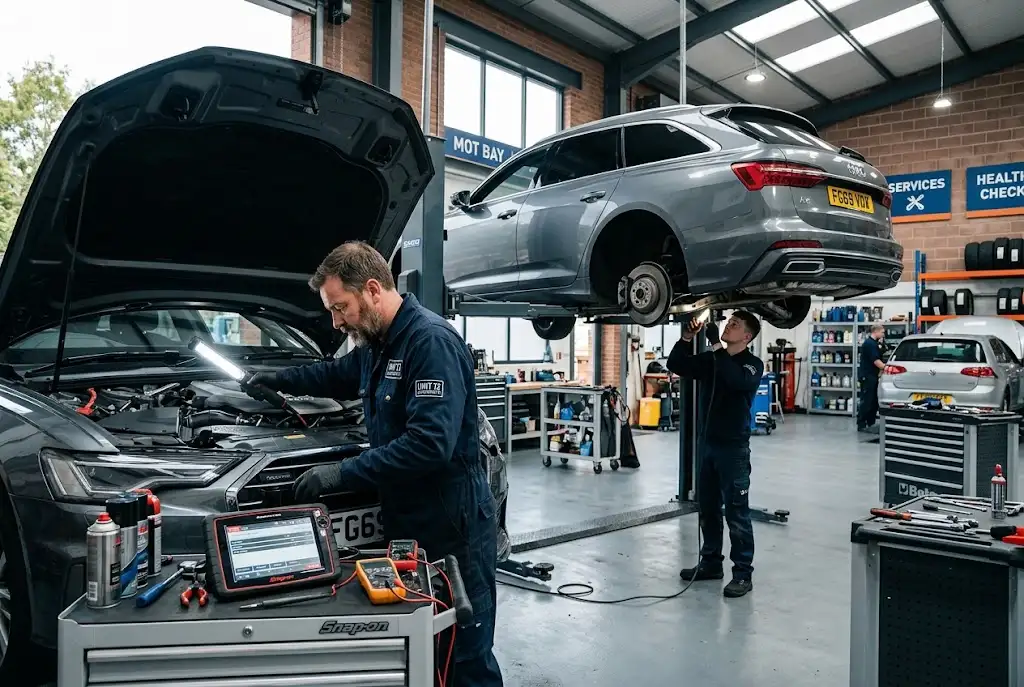
A full car service is a comprehensive routine maintenance appointment designed to assess the condition of your vehicle and carry out important scheduled servicing work. Compared with an interim service, it normally involves a broader range of inspections and maintenance tasks. For many UK drivers, a full service forms an important part of keeping a car reliable, safe and properly maintained.
However, not every vehicle needs the same service at the same time. The appropriate service level depends on the manufacturer’s schedule, mileage, age, driving conditions and previous maintenance history. Understanding the difference between a full, interim and major service can help you choose the right option rather than simply booking the cheapest package.
What Is a Full Car Service?
A full car service is a more comprehensive maintenance check than a basic or interim service. It normally combines routine servicing tasks with inspections of important vehicle systems and components.
The exact checklist varies between manufacturers and garages. A reputable service should be based on the vehicle manufacturer’s recommended maintenance schedule rather than a generic checklist alone.
Depending on the vehicle, a full service may include oil and filter replacement, fluid checks, tyre inspections, brake checks, battery checks, steering and suspension inspections, lights and electrical checks, and visual inspections for leaks or damage.
The purpose is not simply to find something wrong. Regular servicing helps establish a maintenance record and gives technicians an opportunity to identify developing problems before they become more serious.
What Does a Full Car Service Include?
There is no universal checklist for every vehicle, but a comprehensive service commonly covers several important areas.
Engine Oil and Oil Filter
Engine oil helps lubricate internal components and reduce friction. Where required by the manufacturer’s schedule, the old oil is replaced with the appropriate specification and the oil filter is changed.
Using the correct oil specification is important because modern engines can have specific requirements. Your vehicle handbook or manufacturer’s servicing information should be used to identify the appropriate specification.
Fluid Checks
Technicians may check relevant fluid levels and condition, including engine coolant, brake fluid and screenwash. Other fluids may be inspected depending on the vehicle and service schedule.
Visible signs of leaks can also be investigated. If a fluid level repeatedly falls, the underlying cause should be identified rather than simply topping it up indefinitely.
Brake Inspection
Brakes are among the most important safety systems on a vehicle. During servicing, relevant brake components can be visually inspected for signs of wear or damage.
If brake pads, discs or other components require attention, the garage should explain the issue and provide a quotation for the additional work.
Tyre Checks
Tyres can be checked for tread condition, visible damage and uneven wear. Correct tyre pressures are also important for handling, braking and fuel efficiency.
Regular inspection can reveal issues that may otherwise go unnoticed, particularly if a tyre is wearing more quickly on one side.
Battery and Electrical Systems
A full service may include checks of the battery, lights and relevant electrical systems. Modern cars rely heavily on electronics, so warning lights and unusual electrical behaviour should be reported to the technician.
Steering and Suspension
Steering and suspension components influence vehicle control and ride quality. A service can provide an opportunity to identify visible wear, damage or other concerns affecting these systems.
Filters and Scheduled Components
Air filters, cabin filters, fuel filters and spark plugs may require replacement at particular intervals. They are not necessarily replaced at every full service.
This is why the manufacturer’s service schedule matters. A garage should identify which scheduled items are actually due for your vehicle rather than treating every component as a routine replacement.
Full Service vs Interim Service
One of the most common questions is the difference between a full service and an interim service.
An interim service is generally a shorter maintenance appointment focused on essential checks and routine servicing between more comprehensive services. It can be appropriate for vehicles that cover substantial mileage or have servicing schedules that require more frequent maintenance.
A full service normally covers a broader range of checks and maintenance tasks. The right option depends on the vehicle’s service schedule rather than personal preference alone.
If you are unsure which service is due, check the owner’s handbook, service record or manufacturer’s digital service information. A garage can also use the vehicle’s registration and mileage to help determine the appropriate maintenance requirements.
Full Service vs Major Service
A major service is generally more extensive than a standard full service because it may include additional manufacturer-specified maintenance items that become due at particular mileage or time intervals.
For example, some components are only scheduled for inspection or replacement at specific intervals. The work can therefore vary significantly between service milestones.
Rather than assuming that every older vehicle needs a major service, check its documented maintenance history and the manufacturer’s recommended schedule. This can help prevent unnecessary work while ensuring important scheduled maintenance is not missed.
How Often Should You Have a Full Car Service?
There is no single servicing interval that applies to every car. Manufacturers establish maintenance schedules according to the vehicle’s design, engine, mileage and other factors.
Some vehicles have time-based intervals, while others use mileage or onboard service indicators. Driving conditions can also affect maintenance requirements.
For that reason, the best approach is to follow the manufacturer’s recommendations. If you have bought a used car and the service history is incomplete, an inspection by a reputable garage can help establish what maintenance may be required.
How Much Does a Full Car Service Cost?
The full service price UK drivers pay varies according to the vehicle, garage, parts, labour and work required. A small car can have different servicing costs from a larger premium vehicle or a specialist model.
Additional repairs can also increase the final invoice. For example, a full service might identify worn brake pads or a damaged tyre. Those repairs are separate from the basic service package, even though the problem was discovered during the appointment.
If you want to understand the factors behind servicing prices in more detail, see our guide to car service cost.
When comparing quotations, always check what is included rather than comparing headline prices alone. Two garages may advertise different prices because their service checklists or included consumables differ.
Can You Have a Full Service and MOT Together?
Yes, many garages allow customers to arrange servicing and an MOT around the same time. However, the two procedures serve different purposes.
An MOT checks whether a vehicle meets specific legal requirements for roadworthiness and environmental standards at the time of testing. A service is preventative maintenance intended to assess and maintain the vehicle.
Passing an MOT does not mean the vehicle has received a full service. Likewise, completing a full service does not replace the requirement for an MOT when one is due.
The official GOV.UK MOT guidance provides information about MOT requirements and testing.
For drivers considering a combined appointment, our guide to MOT and service explains the differences and what to consider when booking both.
Benefits of Regular Full Servicing
Regular servicing provides several practical benefits for vehicle owners. Most importantly, it gives you a structured opportunity to monitor the condition of your car.
Problems such as fluid leaks, worn components, uneven tyre wear or battery issues may be identified before they cause a breakdown. Early attention does not guarantee that a failure will be prevented, but it can make vehicle maintenance more predictable.
A consistent service history can also be useful when selling a vehicle. Buyers may want evidence that the car has been maintained according to an appropriate schedule.
Servicing can also help you plan future maintenance. If a technician identifies a component that is beginning to wear but does not require immediate replacement, you can budget for it instead of being surprised later.
What to Take to Your Full Service
Before taking your vehicle to a garage, it is useful to have relevant service information available. This can include the owner’s handbook, previous invoices and service records.
Tell the technician about any recent warning lights, unusual noises, changes in handling, starting problems or other symptoms. Even if the issue appears minor, this information can help direct the inspection.
If you have a digital service record, make sure the garage knows about it and ask how the completed service will be recorded.
How to Choose a Garage for a Full Car Service
Price is important, but it should not be the only consideration when selecting a garage. Look for a business that provides clear quotations, explains recommended work and has appropriate equipment for your vehicle.
A good garage should distinguish between scheduled servicing and additional repairs. If extra work is discovered, ask for an explanation and quotation before authorising it.
It is also worth checking whether the garage can follow your vehicle manufacturer’s recommended schedule and maintain an accurate service record.
Full Car Service and Preventive Maintenance
A service should be part of a wider vehicle maintenance routine rather than the only time you inspect your car.
Between services, drivers can pay attention to tyre condition, dashboard warning lights, fluid levels where appropriate, lights and changes in vehicle performance. Seasonal checks can also be useful before long journeys or periods of difficult weather.
Our wider car maintenance guide covers practical preventative care, service intervals and maintaining a useful vehicle history.
When Should You Book a Full Car Service?
If your vehicle is approaching the manufacturer’s recommended full service interval, it is sensible to arrange the appointment rather than waiting for a fault to appear.
You should also consider an inspection if you have recently purchased a used vehicle with limited maintenance records. A technician can assess the car and help identify outstanding servicing requirements.
Most importantly, do not ignore warning signs simply because the next scheduled service is months away. Problems such as unusual braking behaviour, significant vibrations, warning lights or fluid leaks deserve prompt attention.
Final Thoughts on Full Car Service
A full car service provides a comprehensive opportunity to maintain your vehicle and check the condition of important systems. It generally covers more areas than an interim service, while a major service may add further manufacturer-specified maintenance at particular intervals.
The correct servicing schedule depends on your vehicle, mileage, age and manufacturer’s recommendations. By keeping accurate service records, comparing clear quotations and addressing developing problems early, you can make routine vehicle ownership easier to manage and keep your car properly maintained.
