

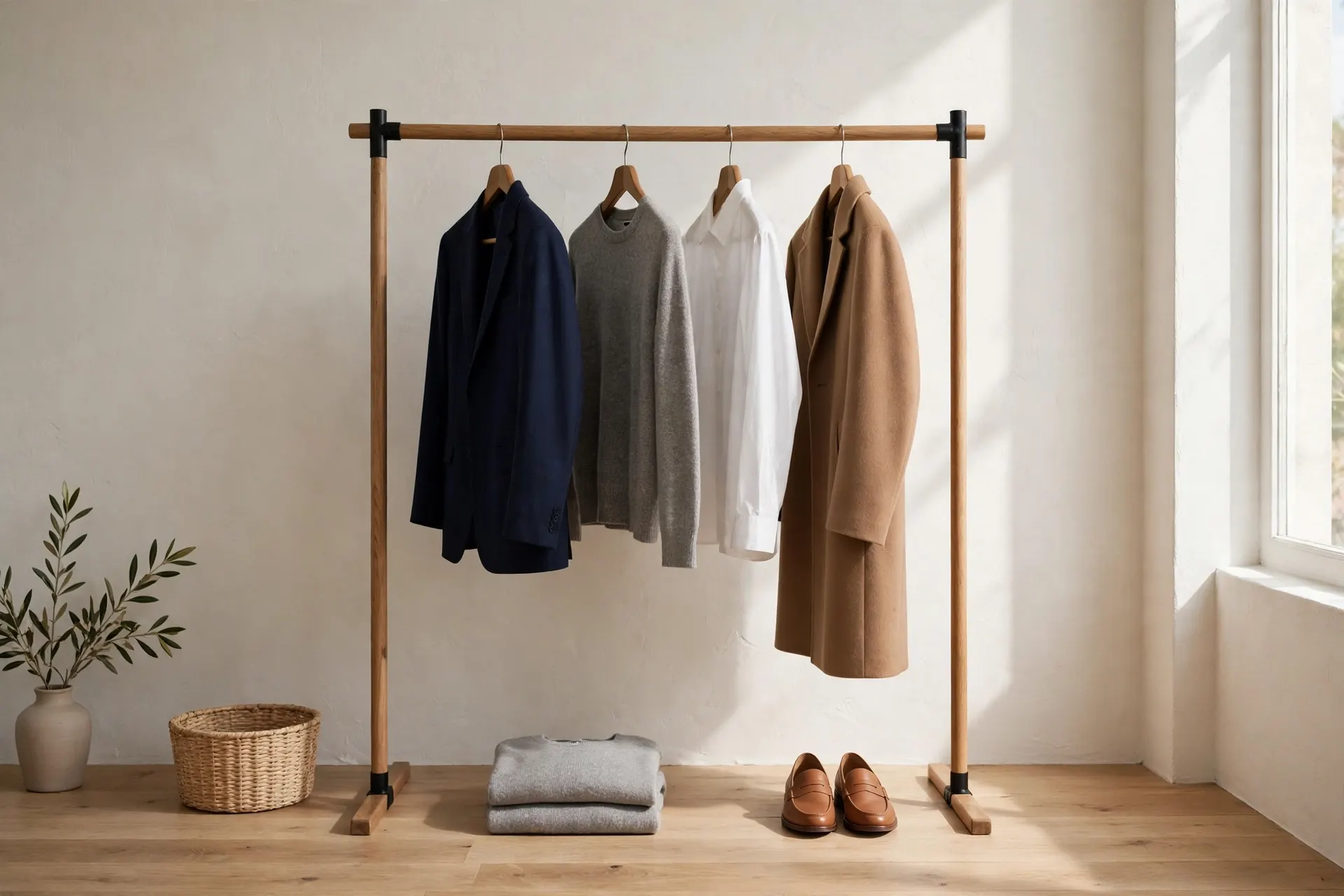
Most wardrobes are full of clothes and short on outfits. A capsule wardrobe fixes that by cutting your clothing down to a smaller set of pieces that all work together, so getting dressed takes minutes and almost everything you own actually gets worn. Learning how to build a capsule wardrobe is less about buying new things than about editing what you already have with a clear head.
There is no single correct size. Some people thrive on thirty pieces; others need fifty once work, exercise and social lives are counted. What matters is that every piece earns its place, suits your real life, and mixes with the rest.
Start With an Honest Audit
Take everything out, category by category, and sort it into three piles: worn often, worn rarely, and not worn in a year. Be honest about the reasons. Clothes kept for a body, job or lifestyle you no longer have are taking up space and quietly making you feel bad every morning.
The rarely-worn pile deserves a second look rather than automatic exile. Sometimes a good item is stranded because nothing goes with it; sometimes it simply needs a repair or an adjustment. Everything else can be sold, donated or recycled. The goal of the audit is not minimalism for its own sake; it is a wardrobe where the average piece is worn regularly and liked.
Build Around Your Real Week
A capsule built for an imagined life fails immediately. Count how your week actually splits: office days, working from home, school runs, evenings out, sport. Your wardrobe proportions should match that split. Someone who works five days in an office needs more smart rotation than someone mostly at home, and there is no point owning four evening dresses for a social life that happens twice a year.
Weather matters too. A UK capsule has to survive rain, cold snaps and the odd warm week, so dependable layers and one genuinely waterproof coat will serve you better than a rail of summer pieces waiting for a holiday.
Choose a Colour Story
The quiet trick behind every working capsule is colour discipline. Pick two or three neutral base colours that suit you, such as navy, grey, black, white or camel, then add one or two accent colours that work with all of them. When everything shares a palette, almost any top pairs with almost any bottom, and the number of outfits grows far faster than the number of items.
This is also where restraint pays at the shops. A beautiful bargain in a colour that matches nothing you own is not a bargain; it is the start of another stranded pile. The same thinking is reshaping the wider industry, as our look at how UK brands are building more sustainable models shows in the beauty world: fewer, better-chosen things, used properly.
The Core Pieces That Do the Heavy Lifting
Exact lists vary, but a dependable core usually includes well-fitting jeans and trousers, plain tops in your base colours, a couple of knitwear layers, a blazer or structured jacket, a versatile dress or equivalent, and shoes that cover smart, casual and wet-weather duties. Fit matters more than labels: a plain shirt that fits properly looks better than an expensive one that pulls or sags.
Quality is worth paying for in the pieces you wear weekly, because cost per wear is the honest measure. A coat worn a hundred times a year at a pound a wear beats a cheap one that falls apart by February.
Fill Gaps Slowly, on Purpose
After the audit you will have a short list of genuine gaps: perhaps a white shirt, a warm mid-layer, shoes that bridge smart and casual. Buy those deliberately, one at a time, trying each against what you already own. Resist rebuilding the whole wardrobe in one shopping trip; that is how the clutter started.
Local shopping helps here, because fit can be checked properly. Our guide to finding the best local beauty stores makes the same point for makeup, and our piece on finding the right UK hair retailer shows how much difference knowledgeable local shops make. The principle transfers directly to clothes: try, compare, then commit.
Keep It Working
A capsule wardrobe is maintained, not finished. A one-in-one-out habit keeps the rail from creeping back up, and a quick review at the change of seasons catches pieces that have worn out or quietly stopped being worn. Store off-season clothes away so the working wardrobe stays visible and quick to use.
Expect your capsule to evolve. Jobs change, bodies change, tastes change. The point is not a fixed number of hangers but a wardrobe that always reflects your life as it is now.
Common Mistakes to Avoid
The most common mistake is copying somebody else’s capsule. Influencer lists are built for their climate, job and taste; transplanted wholesale, they leave you with gaps exactly where your own life is busiest. Use other lists for ideas, never as a shopping template.
The second mistake is editing in the wrong mood. A ruthless clear-out after a bad week tends to remove comfortable, useful clothes and keep aspirational ones. Audit on an ordinary day, and hold a small “not sure” box for a month before donating; if you never reach into it, the decision has made itself. Finally, do not chase an exact item count. Thirty-seven is a fine number for someone else. Your right number is the one where everything fits your rail, your week and your laundry routine.
The Bottom Line
To build a capsule wardrobe that actually works, audit honestly, plan around your real week, stick to a simple colour story, and fill gaps slowly with pieces that fit your life. You will spend less, waste less, and still feel better dressed – a direction the whole industry is drifting towards, as our look at how technology and changing habits are reshaping beauty suggests. Fewer choices, better ones: that is the entire idea.
