

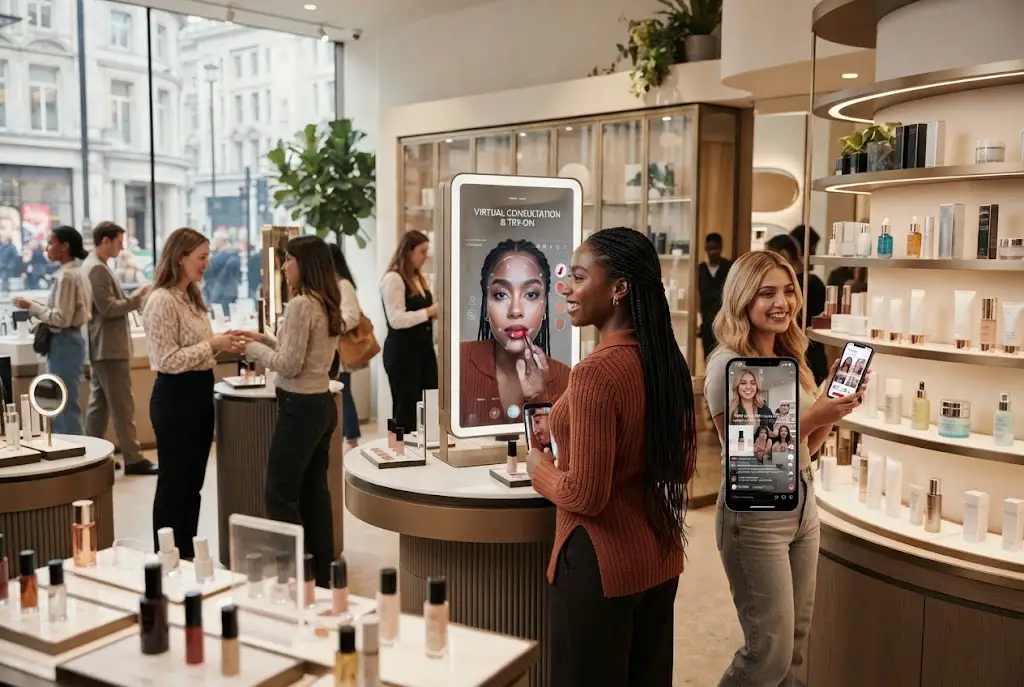
The future of beauty is being shaped by more than new cosmetics and changing fashion preferences. Artificial intelligence, social commerce, personalisation, wellness, digital experiences and evolving consumer expectations are changing how beauty products are discovered, purchased and used. For UK consumers and businesses, these developments are creating new opportunities while also introducing challenges around trust, regulation and competition.
Beauty is increasingly connected to technology and wider lifestyle choices. Customers can discover products through creators, receive personalised recommendations online and move from content to purchase without visiting a traditional shop. At the same time, physical retailers remain important because shoppers still value expertise, convenience and experiences.
The result is a beauty industry that is becoming more connected, more digital and increasingly focused on individual needs.
What Does the Future of Beauty Look Like?
The future of beauty is unlikely to be defined by one single trend. Instead, several developments are happening at the same time. Artificial intelligence is improving digital recommendations, social platforms are becoming shopping destinations, wellness is overlapping with beauty and retailers are experimenting with more personalised experiences.
Recent industry research points towards a significant shift in beauty discovery and purchasing. McKinsey’s 2026 beauty analysis expects ecommerce to account for the largest share of beauty sales growth through 2030, while social commerce and emerging forms of AI-assisted shopping continue to develop. McKinsey’s beauty industry analysis also highlights the growing convergence of content, discovery and commerce.
For businesses, this means that simply having a good product may no longer be enough. Brands increasingly need to make their products easy to discover, understand, compare and purchase across several digital and physical environments.
AI and the Future of Beauty
Artificial intelligence is likely to become one of the most influential technologies in the beauty sector. Its role is already extending beyond simple automation into product discovery, personalisation, customer service and digital shopping experiences.
AI-Powered Product Recommendations
Consumers often face an enormous number of beauty products when shopping online. AI tools can help narrow those choices by analysing information about preferences, routines and product characteristics.
For example, an online beauty platform could potentially recommend skincare products based on a customer’s stated concerns, previous purchases and preferred ingredients. Similar systems can help shoppers compare products or identify options that fit particular routines.
However, personalisation also creates a responsibility to be transparent. Customers need to understand why recommendations are being made and what information is being used. Trust will become increasingly important as AI becomes more involved in beauty purchasing.
AI Beauty Assistants
AI assistants may increasingly act as digital shopping companions. Instead of searching for individual products, customers could ask questions in natural language and receive recommendations based on their needs.
This could change how beauty brands approach search visibility. Product descriptions may need to provide clearer information about ingredients, benefits, suitability and usage so that both consumers and AI systems can understand them.
Social Commerce and the Beauty Industry Future
Social commerce is another major part of the beauty industry future. Platforms that were once primarily used for entertainment and communication are increasingly involved in product discovery and purchasing.
Beauty is particularly suited to social commerce because many products can be demonstrated visually. Makeup transformations, hair tutorials, skincare routines, product comparisons and short reviews can all help customers understand how a product might fit into their lives.
Creators can also influence product discovery. A customer may encounter a product through a tutorial or review before actively searching for the brand. This makes content creation part of the commercial journey rather than simply a separate marketing activity.
McKinsey’s 2026 research describes social commerce as one of the fastest-changing beauty channels and notes that discovery, content and purchasing are increasingly converging. Its analysis of beauty trends through 2030 highlights the growing importance of creators, social platforms and digital marketplaces.
Personalisation Will Become More Important
Consumers increasingly expect products and recommendations to feel relevant to their individual needs. This is helping make personalisation one of the most important future beauty trends.
Personalisation can take many forms. It may involve product recommendations, customised routines, targeted communications, subscription services or digital consultations.
For example, rather than presenting every customer with the same skincare collection, a retailer could organise products around different needs and routines. Similarly, makeup platforms can help shoppers narrow down suitable shades or finishes.
The challenge is balancing convenience with privacy and trust. Personalisation becomes more valuable when it genuinely helps the customer, but businesses need to handle customer information responsibly and communicate clearly about how digital tools work.
The Convergence of Beauty and Wellness
The boundaries between beauty and wellness are becoming less distinct. Consumers increasingly view appearance, self-care and general wellbeing as connected parts of their lifestyles.
This convergence can influence product development, marketing and retail experiences. Beauty businesses may increasingly discuss sleep, stress, nutrition, fitness and wellbeing alongside traditional skincare, haircare and cosmetics.
That does not mean every beauty product should make health-related claims. In fact, responsible communication will become increasingly important as the categories overlap. Businesses need to distinguish cosmetic benefits from medical or therapeutic claims and ensure that marketing remains accurate.
Beauty Technology and Experiential Shopping
Beauty technology is also changing the way customers interact with products. Digital consultations, virtual try-on tools, skin analysis systems and personalised recommendations can reduce uncertainty when shoppers are deciding what to buy.
Technology can be particularly useful online because customers cannot physically test many products before ordering. Virtual experiences may help shoppers understand colours, finishes or product combinations before completing a purchase.
Physical stores can also use technology to improve the shopping experience. Digital displays, consultations and personalised services can complement traditional staff expertise rather than replacing it.
This is important because the future of retail is unlikely to be purely digital. Instead, successful beauty businesses may combine ecommerce convenience with the expertise and sensory experience available in physical stores.
The Future of Beauty Retail
The UK beauty retail market is already changing. Mintel reported that UK specialist beauty and personal-care retail sales contracted in 2025, showing that the sector cannot rely on straightforward growth across every channel. At the same time, online shopping, social commerce and AI-powered experiences are creating new ways for brands to reach customers.
This creates an important distinction between growth in the overall beauty market and performance within individual retail channels. A retailer can face pressure even when consumer interest in beauty remains strong.
For physical stores, differentiation may increasingly come from service, curation, product expertise and experience. For online retailers, convenience, personalisation, content and trustworthy product information may become more important.
Our guide to cosmetics shops near me explores why local beauty retail still matters, particularly for customers who want to see products in person or need immediate availability.
Beauty Innovation and New Product Development
Beauty innovation will remain central to competition. New formulations, delivery systems, textures, packaging concepts and product formats can give brands opportunities to stand out.
Innovation does not always mean creating something completely new. Sometimes it involves improving an existing product so that it solves a familiar problem more effectively or provides a better customer experience.
Technology can also accelerate innovation by helping businesses analyse consumer preferences and identify gaps in the market. However, successful innovation still depends on whether customers see genuine value in the final product.
Sustainability and Responsible Beauty
Sustainability is likely to remain part of the industry’s long-term development, although consumers and regulators may increasingly expect specific evidence rather than broad environmental claims.
Packaging, ingredients, sourcing, manufacturing and supply chains can all influence the environmental footprint of beauty products. Brands may therefore face greater pressure to explain what sustainability claims actually mean.
UK regulation is another factor businesses must consider. GOV.UK states that cosmetic products supplied in Great Britain must meet safety and information requirements, including having a named Responsible Person and appropriate product information. GOV.UK’s consumer cosmetics guidance provides information about product safety, labelling and what consumers should check before buying.
Regulation is continuing to evolve. The UK’s cosmetic product enforcement guidance was updated in June 2026, demonstrating that compliance remains an active consideration for businesses operating in the sector.
Beauty Industry Opportunities
The changing market creates significant beauty industry opportunities for established companies, independent retailers and new businesses.
Digital-first beauty brands can reach customers without building large physical retail networks. Specialist retailers can serve specific communities and hair or skincare needs. Technology companies can develop tools that improve product discovery, virtual consultations and personalisation.
There are also opportunities in content creation, influencer partnerships, ecommerce management, digital marketing, data analysis and customer experience. As the boundaries between technology and beauty continue to blur, people with combined skills may become particularly valuable.
Challenges Facing the Future of Beauty
The industry’s opportunities come with significant beauty industry challenges. Competition is increasing as more brands enter digital marketplaces and social platforms make it easier for new products to gain attention.
Trust is another major issue. Consumers are exposed to large amounts of beauty content, including recommendations, reviews and claims that may vary considerably in quality. Brands need accurate product information and credible communication to build long-term relationships.
Regulation and product safety also remain essential. UK authorities continue to monitor cosmetic products and enforce requirements designed to protect consumers. Recent government data shows the scale of the UK’s cosmetic notification system and ongoing enforcement activity.
Finally, businesses must avoid confusing innovation with novelty. A new technology or product format only creates sustainable value when it genuinely improves the customer experience.
What the UK Beauty Market Outlook Could Mean for Businesses
The UK beauty market outlook is likely to involve both opportunity and disruption. Beauty remains a broad consumer category, but the way customers discover and purchase products is changing quickly.
Brands that depend heavily on one channel may face greater risks as consumers move between social platforms, marketplaces, specialist retailers and brand websites. An effective strategy may therefore need to work across multiple touchpoints.
Businesses should also pay attention to how customers search for information. Traditional search engines remain important, but AI assistants, social platforms and creator content are becoming additional discovery routes.
This means product pages should be clear, useful and detailed. Information about ingredients, benefits, suitability, usage and evidence can help customers make decisions while also improving the information available to digital recommendation systems.
How Beauty Businesses Can Prepare for the Future
Preparing for the future of beauty does not necessarily require every business to adopt every new technology. A more practical approach is to identify where technology can solve genuine customer problems.
Businesses can start by improving product information, understanding their customers, strengthening digital content and making purchasing journeys easier. They can then test technologies such as AI recommendations or virtual consultations where there is a clear business case.
Retailers should also maintain the human side of beauty. Expert advice, personal service and real-world product experiences can remain valuable even as digital tools become more sophisticated.
For smaller businesses, focusing on a specific customer group can be more effective than attempting to compete with every major beauty platform. Specialist knowledge and strong customer relationships can become important competitive advantages.
Future Beauty Trends to Watch
Several developments are worth watching as the industry moves towards the end of the decade.
- AI-assisted shopping: Digital assistants may increasingly help consumers compare products and build routines.
- Social commerce: Product discovery and purchasing will continue moving closer together on social platforms.
- Personalised beauty: Recommendations and services are likely to become more tailored to individual preferences.
- Wellness convergence: Beauty and wider self-care categories may continue to overlap.
- Experiential retail: Physical shops may focus more heavily on expertise, discovery and personalised service.
- Transparent product information: Consumers are likely to place increasing value on clear ingredients, safety information and credible claims.
- Beauty technology: Virtual try-ons, digital consultations and AI-powered tools may become more common across online and physical retail.
Final Thoughts on the Future of Beauty
The future of beauty will be shaped by the combination of technology, changing consumer behaviour and a broader understanding of what beauty means. AI, social commerce, personalisation, wellness and experiential retail are not isolated developments. They are increasingly connected parts of the same transformation.
For consumers, this could mean more convenient shopping and more relevant product recommendations. For businesses, it creates new ways to reach customers but also raises the standard for product information, trust, innovation and customer experience.
The UK beauty industry is therefore entering a period where adaptability may matter as much as product range. Businesses that understand their customers, use technology thoughtfully and maintain strong standards of quality and transparency will be better positioned to compete as the market continues to evolve.
