

For UK drivers, brake condition is also an important part of vehicle roadworthiness. GOV.UK advises drivers to make sure their brakes work correctly and highlights the importance of checking brake fluid levels.
When Do You Need Brake Repair?
Brake problems do not always appear as an obvious failure. In many cases, the first signs are changes in how the vehicle feels or sounds during braking. Arranging a brake inspection when these symptoms appear can help determine whether you need a minor adjustment, brake pad replacement or more extensive repairs.
Common warning signs include:
- Squealing or grinding noises when braking
- A brake pedal that feels soft or spongy
- The vehicle pulling to one side when braking
- Vibration through the steering wheel or brake pedal
- A longer stopping distance than usual
- A brake warning or brake wear warning light
- Visible damage or excessive wear around the braking components
- Low or suspected leaking brake fluid
The UK Highway Code guidance notes that a vehicle pulling to one side during braking can indicate a brake fault or incorrectly inflated tyres. It also warns that low brake fluid can contribute to brake failure.
What Does a Brake Inspection Include?
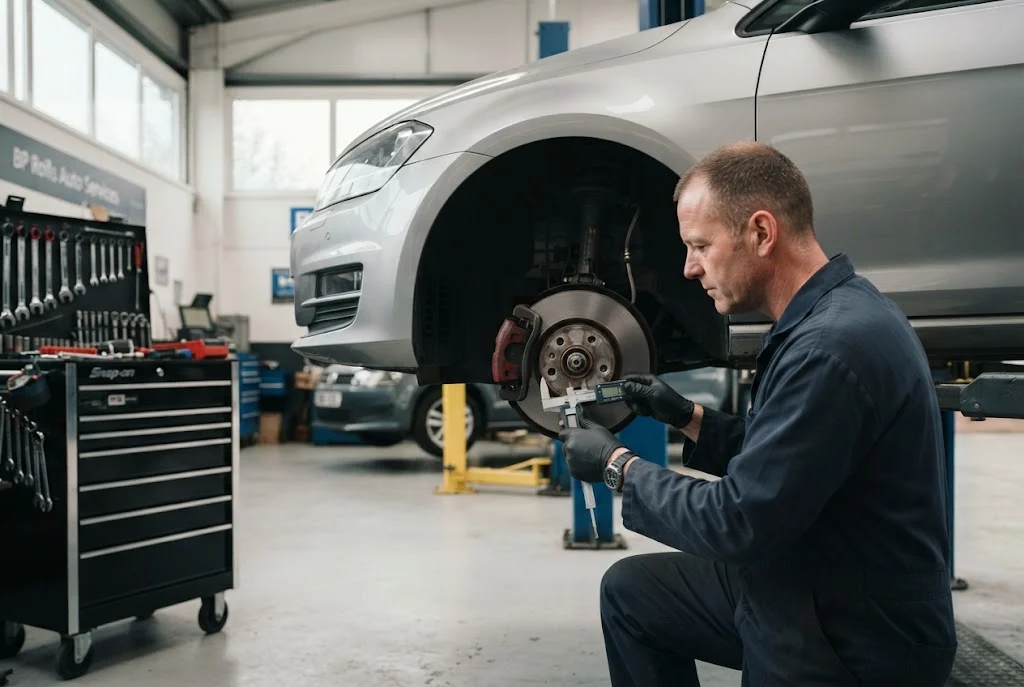
A proper brake inspection should look beyond the brake pads alone. The exact checks depend on the vehicle and the symptoms reported, but a technician may examine the pads, discs, callipers, hoses, pipes and hydraulic system.
The inspection can also help identify uneven wear. For example, one brake pad may be wearing differently from its counterpart because of a calliper or related braking-system issue. Simply replacing the visible worn component without investigating the underlying cause may not resolve the problem.
The official MOT inspection guidance covers components including brake pads, discs, drums, callipers, brake hoses, hydraulic components and brake fluid.
Brake Pad Replacement: When Is It Needed?
Brake pad replacement is one of the most common forms of brake maintenance. The Brake pads gradually wear because their friction material is used to slow the vehicle. Once they become sufficiently worn, replacement is necessary to maintain effective braking.
Some brake pads have wear indicators that produce a squealing sound when the pad reaches a specified wear point. Other vehicles use electronic warning systems. However, drivers should not wait for a warning light or noise before having the brakes checked.
Under the current UK MOT inspection guidance, a brake lining or pad worn down to its wear indicator is treated as a major defect, while a pad below 1.5mm is categorised as dangerous within the MOT inspection framework.
Brake Pads and Discs Replacement
Sometimes replacing the pads alone is appropriate. In other situations, both pads and discs may need attention. Brake discs can develop significant wear, scoring, corrosion or other damage, depending on vehicle use and condition.
Replacing brake pads and discs together can be necessary when the discs are sufficiently worn or damaged. A technician should assess the condition of the complete braking system rather than automatically replacing every component.
The MOT inspection manual states that brake discs or drums must be significantly and obviously worn or otherwise in an unsafe condition to be rejected under the relevant inspection criteria.
If your vehicle needs more than routine braking work, it can also be useful to consider related maintenance such as suspension repair or wheel alignment. Suspension and wheel alignment problems can affect handling, tyre wear and the way a vehicle behaves during braking.
Brake Fluid Service Explained
Brake fluid transfers hydraulic pressure through the braking system. Its condition and level therefore matter when maintaining a vehicle’s braking performance.
A brake fluid service may be recommended when the fluid requires replacement according to the vehicle manufacturer’s maintenance schedule or when inspection identifies a relevant problem. The correct specification depends on the vehicle, so the manufacturer’s requirements should always be followed.
Drivers should also pay attention to the brake fluid warning system. The UK MOT manual includes brake fluid level and contamination within its braking-system inspection requirements.
What About BMW Brake Fluid Service?
BMW brake fluid service follows the same basic principle as brake fluid maintenance on other vehicles: the correct fluid specification and manufacturer-recommended servicing requirements should be followed. BMW owners should use the appropriate service information for their particular model rather than relying on a generic interval.
If the brake fluid level is unexpectedly low, topping it up should not be treated as a complete diagnosis. A significant loss may indicate a leak or another braking-system issue that needs professional attention.
What Affects Brake Repair Cost?
Brake repair cost varies considerably because there is no single repair that applies to every vehicle. The final price depends on the component requiring attention, vehicle make and model, parts selected, labour requirements and whether additional faults are discovered during inspection.
For example, replacing a set of brake pads is normally a different job from replacing pads and discs. A brake fluid service is also a separate maintenance procedure, while a damaged calliper, hose or hydraulic component can require more extensive work.
Before approving repairs, ask the garage to explain which components require replacement, why the work is necessary and whether the quoted price includes parts, labour and any associated checks. This makes it easier to compare quotes accurately.
How to Choose a Brake Shop
When searching for a brake shop, focus on the quality and scope of the inspection rather than choosing purely on price. A suitable garage should be able to explain the condition of the braking system clearly and identify which work is necessary.
Useful questions to ask include:
- What caused the brake problem?
- Do the pads need replacing, or are the discs also worn?
- Has the brake system been inspected for uneven wear?
- Does the brake fluid require servicing?
- Are there any additional safety issues?
- What parts and labour are included in the quotation?
A good inspection is particularly important if the vehicle has developed a new braking symptom. The objective should be to identify the actual fault rather than simply replace the first component that appears worn.
Brake Repair and MOT Preparation
Brake maintenance should not be left until an MOT test is due. A vehicle can develop a braking fault between MOT tests, and passing an earlier MOT does not guarantee that the vehicle remains roadworthy indefinitely.
GOV.UK states that drivers are responsible for ensuring their vehicle remains roadworthy even when it has a current MOT certificate.
If an MOT identifies a brake-related defect, the appropriate repair should be completed before the vehicle is used normally. Depending on the circumstances, GOV.UK also provides rules covering partial MOT retests following repairs.
When Should You Stop Driving?
Some brake symptoms should be treated as urgent. If the brake pedal suddenly feels significantly different, braking performance is severely reduced, a hydraulic leak is suspected or the vehicle cannot stop safely, continuing to drive can create a serious safety risk.
Do not assume that a vehicle is safe simply because it can still move. Braking faults can worsen, and the consequences of a component failure can be severe.
If the vehicle is experiencing braking problems alongside steering or handling symptoms, a wider inspection may be appropriate. For example, suspension and steering services can help identify related handling issues, while engine diagnostics and tune-up services address separate engine-related concerns.
Keeping Your Brakes in Good Condition
Regular maintenance can help identify wear before it becomes an urgent repair. Follow the servicing recommendations for your vehicle, pay attention to changes in braking behaviour and arrange an inspection when something feels or sounds different.
It is also sensible to keep an eye on brake fluid levels where the vehicle allows the level to be checked safely and to understand the warning lights displayed on the dashboard. Never ignore a warning that could relate to the braking system.
Brake repair is ultimately about more than replacing worn pads. A complete approach considers the condition of the braking system, identifies the underlying fault and ensures that the vehicle is suitable for safe road use. Whether you need a brake inspection, brake pad replacement, pads and discs replacement or brake fluid service, getting the right diagnosis first can help prevent unnecessary work and keep your vehicle performing as it should.
For further vehicle maintenance, related services such as wheel alignment and balancing can address handling and tyre-wear concerns, while auto exhaust repair can help when exhaust-system problems develop.
