

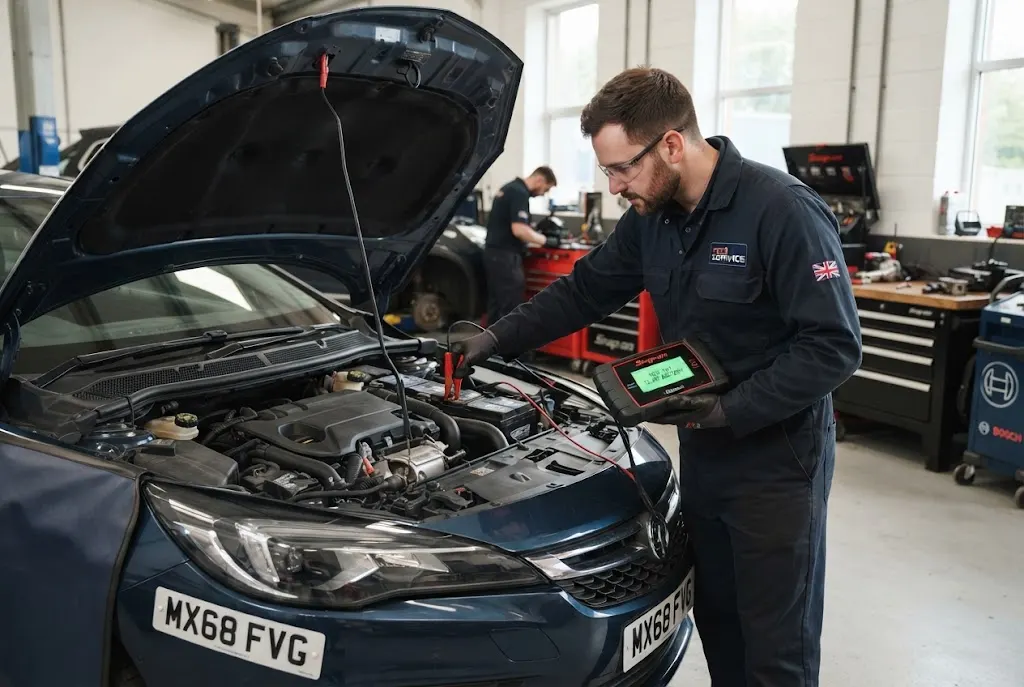
A reliable car battery is essential for starting your vehicle and supporting its electrical systems. When a battery becomes weak or fails completely, an auto battery service can help determine whether it needs charging, testing, replacement or further electrical diagnosis. Getting the cause right is important because a flat battery is not always caused by an old or faulty battery.
UK drivers may experience battery problems for several reasons, including short journeys, long periods of inactivity, cold weather, charging-system faults or normal battery ageing. This guide explains the main battery services available, the signs of a failing battery, what battery replacement involves and when professional electrical diagnostics may be necessary.
What Is an Auto Battery Service?
An auto battery service involves checking and maintaining a vehicle’s battery and, where necessary, identifying the reason for battery-related problems. Depending on the provider and vehicle, the service may include battery testing, charging, inspection of terminals and connections, battery replacement or investigation of repeated battery discharge.
A professional battery assessment should not necessarily begin with replacing the battery. Testing can help establish whether the battery is still serviceable or whether another part of the vehicle’s electrical system is responsible for the problem.
This distinction matters when a vehicle repeatedly goes flat. If a healthy replacement battery is installed but the underlying charging or electrical-drain problem remains, the new battery can eventually experience the same issue.
When Does a Car Need Battery Service?
Several warning signs can indicate that your vehicle’s battery or charging system should be checked.
- The engine turns over slowly when starting.
- You hear clicking when attempting to start the car.
- The vehicle does not start at all.
- Headlights or interior lights appear unusually dim.
- Electrical accessories behave inconsistently.
- The battery repeatedly becomes flat.
- A battery or charging warning light appears.
- The vehicle has been unused for an extended period.
- The battery is visibly damaged or shows signs of corrosion.
These symptoms can have more than one cause. A slow start, for example, could be related to the battery, starter system, poor electrical connections or another issue. Testing is therefore more useful than assuming the battery needs replacing.
Battery Testing: What Does It Check?
Battery testing can provide information about the condition and performance of a vehicle battery. Professional battery testers can assess relevant electrical characteristics and help determine whether the battery is capable of performing its intended function.
Testing may be particularly useful if the vehicle has recently needed a jump start or has developed repeated starting problems. A technician can combine the battery test with an inspection of the vehicle’s charging system when appropriate.
If the battery tests satisfactorily but continues to discharge, further investigation may be required. In that situation, replacing the battery without finding the underlying cause may not provide a lasting solution.
Car Battery Charging
Car battery charging can restore a discharged battery when the battery itself remains in suitable condition. However, charging a battery and fixing the reason it became discharged are two different things.
A battery can become flat after the vehicle has been left unused, after lights or accessories have been left operating or because of an electrical fault. The alternator and charging system can also affect the battery’s ability to remain charged during normal driving.
If the battery repeatedly requires charging, ask for both the battery and charging system to be assessed. A recurring problem deserves more investigation than repeated temporary charging.
Replacing a Car Battery
Replacing a car battery is sometimes the appropriate solution when testing shows that the existing battery has reached the end of its useful service life or is no longer performing adequately.
The replacement battery should be suitable for the vehicle. Battery specifications can vary according to the vehicle’s engine, electrical requirements and equipment.
Some modern vehicles may also require additional procedures after battery replacement, depending on their electrical architecture and battery-management system. For this reason, it is sensible to provide the vehicle’s make, model and registration details when arranging replacement.
How Much Does It Cost to Install a Car Battery?
The cost to install a car battery depends on the battery required, vehicle, labour charges and whether additional procedures are necessary after installation.
When comparing quotations, consider more than the battery’s advertised price. The total cost may include the battery itself, installation, testing, disposal of the old battery and any vehicle-specific registration or configuration procedure where applicable.
A professional provider should be able to explain which battery is being supplied and why it is suitable for your vehicle.
Battery Replacement vs Battery Charging
Battery charging and replacement serve different purposes. Charging may be appropriate when a serviceable battery has simply become discharged. Replacement may be necessary when testing indicates that the battery can no longer hold or deliver an adequate charge.
A battery that has repeatedly been deeply discharged may also warrant testing even if it can still start the vehicle after charging.
If you are unsure whether you need charging or replacement, ask the technician to test the battery before purchasing a new one. This can help distinguish a temporary flat-battery situation from a battery that genuinely needs replacing.
Jump Start Services for Flat Batteries
Jump start services can help drivers whose vehicles will not start because of a discharged battery. A successful jump start can get the vehicle running, but it does not necessarily solve the reason the battery became flat.
After a jump start, the battery and charging system should be assessed if the discharge was unexpected or happens repeatedly. Continuing to rely on jump starts without identifying the cause can leave the vehicle vulnerable to another starting failure.
Drivers should follow the vehicle manufacturer’s instructions when using jump leads or an approved jump-starting device. Incorrect connections can damage electrical components.
Battery Diagnostics and Electrical Problems
Battery diagnostics can be part of a wider vehicle electrical assessment. If the battery repeatedly loses charge despite testing as serviceable, an unwanted electrical drain may need investigation.
Other possible causes can include charging-system faults, poor connections or problems with another electrical component. A systematic diagnostic process can help identify where the issue originates.
This is where battery service can overlap with auto electrical services. An auto electrician may be able to investigate charging problems, wiring faults and other electrical issues that affect battery performance.
How the Alternator Affects Your Battery
The alternator plays an important role in maintaining the vehicle’s electrical supply while the engine is running. A fault in the charging system can result in the battery becoming progressively discharged.
If you replace a battery but the alternator or charging circuit is not functioning correctly, the replacement battery may also become discharged. For that reason, a battery-related diagnosis can include a charging-system check where appropriate.
Symptoms such as a battery warning light, dimming lights or repeated battery failure should be reported to the technician rather than assuming the battery is the only problem.
Why Do Car Batteries Go Flat?
A flat battery can happen for many reasons. Sometimes the cause is simple: the vehicle has not been driven for a long time or an electrical accessory was left operating.
Short journeys can also mean the vehicle does not have as much opportunity to replenish the energy used during starting, particularly when combined with frequent electrical-system use.
However, repeated unexplained battery discharge should be investigated. A charging-system problem or unwanted electrical drain may be responsible.
Does Cold Weather Affect Car Batteries?
Cold conditions can make starting more demanding and can affect battery performance. UK drivers may therefore notice starting difficulties during colder periods, particularly if a battery is already weak or nearing the end of its service life.
If your vehicle has struggled to start during cold weather, battery testing can help establish whether the battery remains suitable for continued use.
Finding Auto Battery Service Near Me
When searching for auto battery service near me, look for a provider that offers more than battery sales. A useful service should be able to test the existing battery and, where necessary, assess the charging system.
Before booking, ask whether battery testing is included and whether the provider can install a replacement battery if required. If the battery repeatedly becomes flat, ask whether electrical diagnostics are available as well.
Mobile services can be convenient when the vehicle cannot be driven to a garage. However, more complicated electrical faults may require a fully equipped workshop for comprehensive diagnosis.
What to Check Before Buying a Replacement Battery
Do not select a replacement battery based only on physical appearance or price. The correct battery needs to be compatible with the vehicle’s requirements.
Useful information to provide includes:
- Vehicle registration number.
- Make and model.
- Engine specification.
- Existing battery details where available.
- Relevant vehicle equipment or battery-management information.
A professional supplier can use the vehicle information to identify an appropriate replacement and explain any installation requirements.
Battery Problems and Other Vehicle Electrical Services
Battery issues can sometimes be the visible symptom of a wider electrical problem. If a replacement battery repeatedly becomes discharged, the vehicle may require additional testing.
Related vehicle electrical repair can address issues involving wiring, charging systems, starting circuits and other electrical components. The appropriate service depends on the results of the diagnosis.
Battery-related symptoms can also appear alongside other vehicle problems. For example, if the vehicle’s climate-control system is malfunctioning at the same time, a separate car air conditioning repair assessment may be appropriate rather than assuming both problems have the same cause.
How to Look After Your Car Battery
Good vehicle maintenance can help reduce avoidable battery problems, although no battery lasts indefinitely. Drivers can pay attention to starting performance and address repeated discharge promptly.
If a vehicle is going to remain unused for an extended period, follow the manufacturer’s recommendations for storage and battery maintenance. Where appropriate, a suitable battery-maintenance device may be considered, provided it is compatible with the vehicle and used according to its instructions.
Keeping battery terminals and connections in good condition can also be useful. If corrosion, damage or loose connections are suspected, have them inspected rather than attempting unnecessary repairs.
Questions to Ask Before Battery Replacement
Before approving a replacement or installation, consider asking:
- Has the existing battery been tested?
- Is the battery itself faulty or simply discharged?
- Is the alternator charging correctly?
- Is there evidence of an electrical drain?
- Which replacement battery is suitable for my vehicle?
- Does installation require any additional vehicle procedures?
- Is the old battery disposal included?
These questions can help you understand whether you need a straightforward replacement or a wider diagnostic service.
When Should You Seek Professional Help?
If your vehicle repeatedly fails to start, regularly needs jump starts or develops unexplained battery discharge, professional testing is worthwhile. A technician can assess the battery and determine whether other components need investigation.
You should also seek assistance if you notice burning smells, damaged wiring, significant corrosion or other signs of an electrical problem. Avoid experimenting with vehicle wiring when the cause is unclear.
Auto Battery Service: Final Thoughts
An auto battery service can cover much more than replacing a flat battery. Battery testing, charging, replacement, installation, jump starts and electrical diagnostics can all form part of maintaining a vehicle’s starting and electrical systems.
The most important step is to establish why the battery is failing. If the battery is simply discharged and still healthy, charging may be sufficient. If it has reached the end of its service life, replacement may be appropriate. The If it repeatedly becomes flat, the charging system or another electrical circuit may need professional investigation.
When choosing a provider, look for a service that can test the battery before recommending replacement and explain the reason for any additional work. For more complex problems, auto electrical services can provide wider electrical diagnosis and repair.
Good battery maintenance is part of broader vehicle care. Alongside battery checks, drivers may also need services such as auto transmission service or auto air conditioning service, depending on the vehicle’s maintenance needs and symptoms.
