

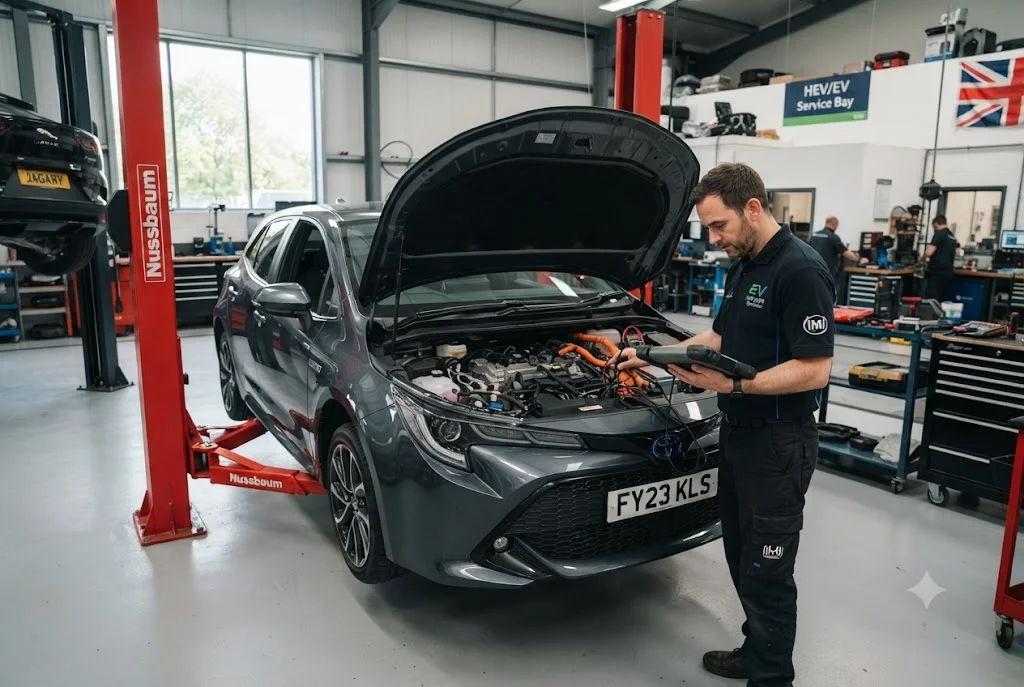
Hybrid servicing is an important part of keeping a hybrid vehicle safe, efficient and dependable on UK roads. Hybrid cars combine a conventional combustion engine with an electric motor and battery system, so their maintenance needs can differ from those of a standard petrol or diesel vehicle. While some components experience less wear, others require specialist knowledge and appropriate diagnostic equipment.
Understanding what a hybrid service includes can help owners choose the right garage, recognise potential problems and keep their vehicle maintained according to the manufacturer’s recommendations. From engine oil and brakes to hybrid batteries and electrical systems, regular inspections can help identify issues before they become more serious.
What Is Hybrid Servicing?
Hybrid servicing involves inspecting and maintaining the mechanical, electrical and electronic systems that allow a hybrid vehicle to operate. The exact service requirements vary according to the manufacturer, model, age and mileage of the car.
A hybrid vehicle may use an internal combustion engine alongside one or more electric motors. The car’s control systems decide how and when these power sources work together. As a result, a service needs to consider both conventional vehicle components and hybrid-specific technology.
A typical hybrid service may include checks of:
- Engine oil and filters
- Brake components
- Tyres and tyre pressures
- Steering and suspension
- Coolant and thermal-management systems
- 12-volt battery
- Hybrid battery and related systems
- Charging components where applicable
- Electrical systems and warning lights
- Diagnostic fault codes
The service schedule supplied by the vehicle manufacturer should remain the main reference because maintenance requirements can vary significantly between hybrid models.
Why Regular Hybrid Servicing Matters
Hybrid vehicles are designed to manage two different forms of propulsion, but they still require routine maintenance. Regular servicing can help identify worn components, fluid issues, electrical faults and other developing problems.
It can also help maintain the vehicle’s efficiency. A hybrid system relies on different components working together correctly, so problems with the engine, battery, brakes or control systems can affect the way the car performs.
Keeping a complete service history is also useful. It provides a record of maintenance and may be important when a vehicle is sold or when warranty-related documentation is required.
What Does Hybrid Maintenance Include?
Hybrid maintenance combines many familiar automotive checks with inspections that are specific to hybrid technology. Some tasks are similar to those required on conventional cars, while others need technicians who understand high-voltage systems and hybrid control electronics.
Engine maintenance remains important because many hybrid vehicles still rely on a petrol engine. Depending on the model and service schedule, this can include oil and filter replacement, coolant checks and inspections of belts, hoses and other components.
The braking system also deserves attention. Regenerative braking allows the electric motor to help slow the vehicle and recover energy, potentially reducing the use of conventional friction brakes. However, brake components still need regular inspection for wear, corrosion and other problems.
Tyres, suspension and steering remain equally important. Uneven tyre wear, vibration or steering changes can indicate a problem that requires further inspection. Where handling issues are identified, a specialist wheel alignment service may be appropriate.
Hybrid Services and High-Voltage Systems
One of the key differences between a hybrid and a conventional petrol car is the presence of a high-voltage electrical system. Depending on the vehicle, this can include the hybrid battery, high-voltage cables, electric motor and associated control equipment.
These systems require appropriate safety procedures. Drivers should not attempt to disconnect, dismantle or repair high-voltage components themselves. Work involving these systems should be carried out by technicians with suitable training and equipment.
GOV.UK guidance for MOT testers highlights the presence of high-voltage systems in hybrid and electric vehicles and explains important safety considerations when dealing with these systems. Hybrid and electric vehicle guidance from GOV.UK is a useful reference for understanding these safety considerations.
Choosing a Qualified Hybrid Mechanic
A qualified hybrid mechanic should understand both conventional automotive systems and the electrical technology used in hybrid vehicles. This combination of knowledge is particularly valuable when a fault involves more than one part of the vehicle.
Before booking a service, ask the garage whether its technicians regularly work on hybrid vehicles and whether they have suitable diagnostic equipment. It is also worth checking whether they can work on your particular make and model.
Useful questions to ask include:
- Do you regularly service hybrid vehicles?
- Are your technicians trained to work on hybrid systems?
- Can you carry out hybrid diagnostic scans?
- Can you inspect the hybrid battery system?
- Can you complete the manufacturer’s recommended service requirements?
- Will you explain any faults or repairs before carrying out additional work?
A workshop with genuine experience of hybrid vehicles can be better placed to identify problems that may not be obvious during a basic mechanical inspection.
Toyota Hybrid Service: What Owners Should Know
A Toyota hybrid service follows the maintenance requirements specified for the particular Toyota model. Toyota has produced hybrid vehicles for many years, meaning its hybrid technology can be found across several model ranges.
Owners should still avoid assuming that every Toyota hybrid has exactly the same service requirements. The recommended schedule can depend on the model, engine, hybrid system and vehicle age.
When arranging servicing, provide the garage with the exact model and registration details. This allows the workshop to identify the appropriate maintenance requirements and check whether specific inspections or replacement items are due.
Toyota hybrid owners should also pay attention to dashboard warnings or changes in the vehicle’s hybrid operation. A warning does not necessarily mean the hybrid battery has failed, but it should be investigated using appropriate diagnostic equipment.
Hybrid Battery Maintenance
The hybrid battery is one of the most important components in the vehicle’s electrified drivetrain. It stores and supplies energy that allows the electric motor to assist the engine or, depending on the vehicle, operate the car under certain conditions.
Battery behaviour can change as a vehicle ages, but drivers should not assume that every change in fuel economy or performance means the battery needs replacing.
Temperature, driving conditions, battery management, vehicle age and other factors can influence hybrid operation. If the vehicle displays a hybrid-system warning or develops noticeable performance changes, professional diagnostics can help determine the cause.
Hybrid battery inspection should be handled by appropriately trained technicians. High-voltage components should not be opened or dismantled as a DIY maintenance task.
Hybrid Brakes and Regenerative Braking
Regenerative braking is one of the defining features of many hybrid vehicles. When the vehicle slows down, the electric motor can operate in a way that helps recover energy and return it to the battery.
Because regenerative braking can reduce reliance on traditional friction brakes, some brake components may experience different wear patterns compared with conventional vehicles. However, reduced brake use does not mean the brakes can be ignored.
Brake discs can develop corrosion when they are not used heavily, while pads, callipers and other components can still require inspection. A proper hybrid service should therefore include appropriate brake checks.
If you notice squealing, grinding, vibration, reduced braking performance or other unusual symptoms, arrange a professional inspection rather than waiting for the next routine service.
Hybrid Servicing and Tyres
Tyres remain a major safety consideration for hybrid vehicles. Correct pressures, sufficient tread and suitable tyre condition all contribute to handling and braking performance.
Uneven tyre wear can sometimes indicate alignment or suspension problems. A hybrid vehicle that pulls to one side, vibrates at certain speeds or shows unusual wear patterns should be inspected.
For drivers looking for broader tyre support, tyre services can cover requirements such as fitting, repairs, balancing, valves and replacement.
Maintaining the correct tyre pressure can also support efficient driving. Under-inflated tyres can increase rolling resistance, while incorrect pressures can affect handling and tyre wear.
Common Hybrid Car Problems
Hybrid vehicles can develop many of the same mechanical problems as conventional cars, alongside faults associated with their electrical systems.
Potential areas requiring attention include:
- 12-volt battery problems
- Hybrid-system warning lights
- Engine faults
- Brake wear or corrosion
- Cooling-system problems
- Charging or electrical-system faults where applicable
- Hybrid battery-related issues
- Suspension wear
- Uneven tyre wear
- Electronic sensor or control-system faults
A warning light should be investigated rather than ignored. Modern hybrid vehicles rely on electronic control systems to manage the interaction between the engine, electric motor, battery and other components.
How Often Should Hybrid Cars Be Serviced?
There is no universal service interval for every hybrid vehicle. Manufacturers specify their own schedules based on the vehicle’s design, mileage and components.
Some hybrids may require scheduled servicing at intervals similar to conventional vehicles, while others may have different inspection requirements. The owner’s handbook and manufacturer service information should therefore be used as the primary guide.
Driving conditions can also influence maintenance needs. Vehicles used frequently for short journeys, heavy traffic or demanding driving may require closer attention to certain components.
Regardless of the scheduled interval, owners should arrange an inspection when they notice unusual noises, warning lights, charging problems, changes in braking behaviour or unexpected changes in vehicle performance.
Hybrid Servicing and Manufacturer Warranties
Warranty arrangements vary between manufacturers and models. Some hybrid vehicles have specific warranty provisions relating to their hybrid battery or electrified drivetrain.
Before choosing a garage, owners should review the relevant warranty documentation and understand any servicing conditions that apply to their vehicle.
Keeping invoices, service records and diagnostic reports can also help maintain a clear maintenance history. If the vehicle is later sold, a documented service record can provide useful evidence of how it has been cared for.
For owners who prefer predictable maintenance costs, structured car service plans may also be worth considering where suitable options are available.
When Should You Take a Hybrid to a Garage?
Routine servicing should follow the manufacturer’s recommended schedule, but some problems require attention sooner. Drivers should arrange professional assistance if they notice:
- A hybrid-system warning light
- Unusual engine or electric-motor behaviour
- Unexpected changes in fuel economy
- Charging problems on a plug-in hybrid
- Unusual brake noises
- Steering vibration or pulling
- Repeated electrical warnings
- Unusual smells or visible damage
- Sudden loss of performance
High-voltage components should never be treated like ordinary mechanical parts. If there is visible damage around high-voltage cables, electrical components or the battery area, avoid attempting a repair yourself and seek professional assessment.
Preparing for a Hybrid Service
A little preparation can make the servicing process easier. Before taking your car to a garage, make a note of any symptoms you have experienced since the previous service.
Include details such as when a warning light appeared, whether it disappears after restarting the vehicle, whether the issue happens when the engine is cold or warm, and whether it occurs during acceleration, braking or charging.
Providing these details can help the technician understand the problem and decide which diagnostic checks may be appropriate.
Hybrid Servicing vs Electric Vehicle Servicing
Hybrid and fully electric vehicles share some technologies, but their maintenance requirements are not identical. A hybrid normally retains a combustion engine, which means it still requires engine-related maintenance such as oil and filter changes.
A fully electric vehicle does not have the same engine-related servicing requirements, although it still needs attention to brakes, tyres, steering, suspension, battery systems and other components.
For owners comparing the two types of vehicle maintenance, our guide to EV servicing provides further information about maintaining fully electric cars.
Keeping Your Hybrid Reliable for the Long Term
Hybrid vehicles can provide efficient everyday transport, but their reliability depends on proper maintenance. Regular servicing allows both conventional and hybrid-specific components to be inspected at appropriate intervals.
The best approach is straightforward: follow the manufacturer’s service schedule, use a suitably equipped workshop, respond to warning signs promptly and keep records of completed work.
Choosing an experienced hybrid mechanic is particularly important when a problem involves high-voltage systems or complex electronic diagnostics. For routine items such as tyres, brakes, steering and suspension, a competent automotive workshop can also provide essential maintenance.
With the right servicing routine, hybrid owners can support the vehicle’s safety, efficiency and long-term reliability while reducing the risk of unexpected maintenance problems.
