

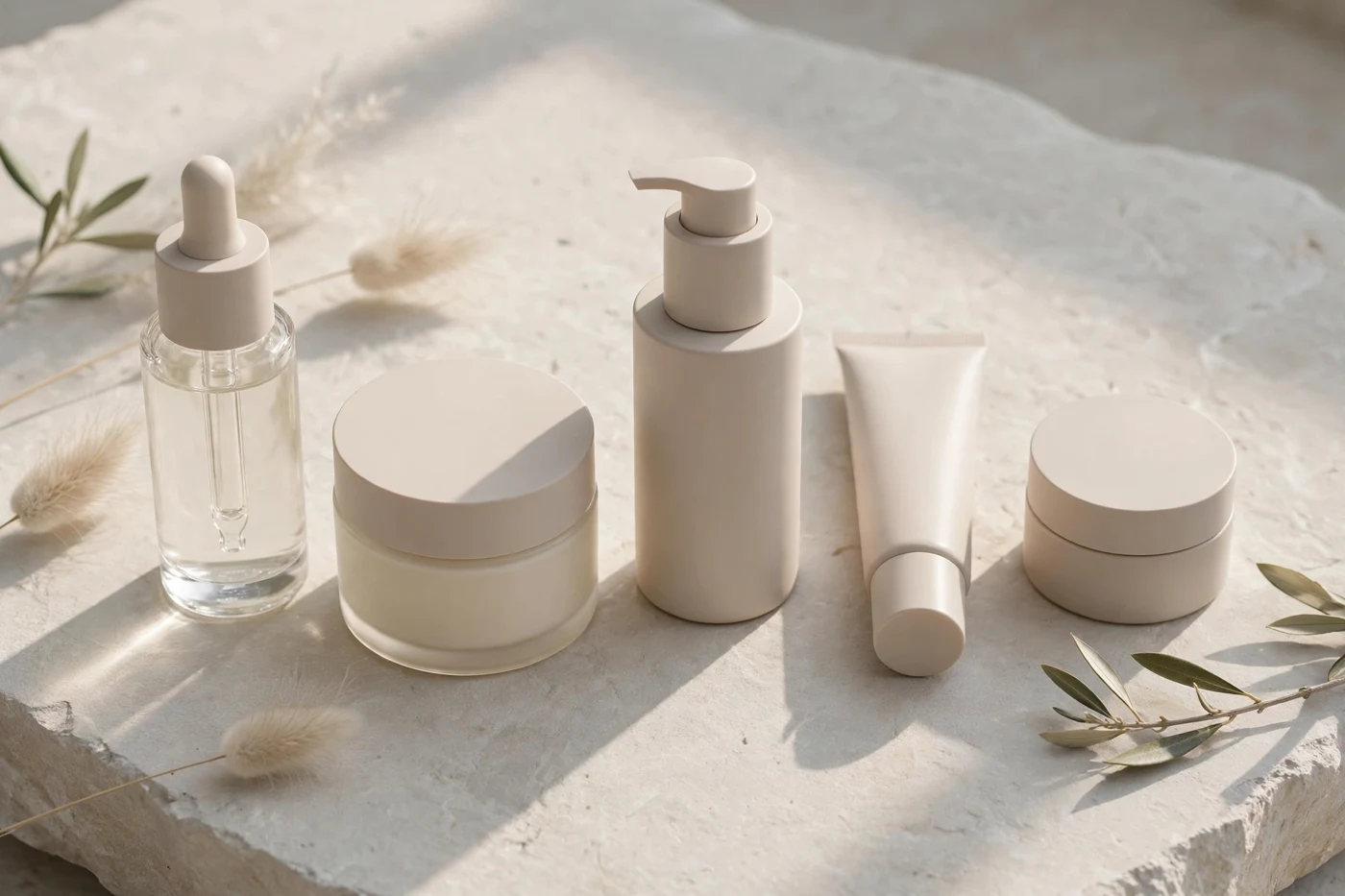
Beauty branding is what turns a good product into a brand people remember, recommend and return to. In a market crowded with new launches every week, the brands that last are rarely the ones with the most products — they are the ones with the clearest position, the most consistent story, and the deepest understanding of their customer. This guide explains beauty branding in practical terms: positioning, brand differentiation, customer perception, and how UK beauty brands build identities that survive trends.
Branding sits above individual products. A customer may buy one lipstick, but they stay for the brand — its values, its look, its tone of voice, and the experience of buying from it. That is why the UK beauty industry rewards brands with a clear identity, and why our guide to the future of beauty shows technology and changing habits reshaping how brands connect with customers.
Beauty Branding Starts With Positioning
Positioning is the decision about what your brand stands for in the customer’s mind. It is a single, clear idea: the affordable luxury brand, the science-led skincare brand, the sustainable brand, the playful colour brand. Everything else — packaging, pricing, advertising, retail partners — should reinforce that one idea. Brands that try to be everything to everyone end up meaning nothing to anyone.
Good positioning starts with the customer, not the product. Who is this brand for, what problem does it solve for them, and what do they value most — price, performance, ingredients, ethics, convenience, or status? A brand for busy professionals will look and sound different from a brand for teenagers, even if both sell moisturiser. The strongest beauty brands can answer those questions in one sentence, and every product they launch fits that sentence.
Brand Differentiation in a Crowded Market
Brand differentiation is how a beauty brand stands apart from competitors selling similar products. It can come from formulation (a unique ingredient or technology), from values (cruelty-free, vegan, refillable packaging), from experience (exceptional service, beautiful stores, generous sampling), or from story (a founder’s journey, a cultural heritage, a distinctive aesthetic).
The most durable differentiation is hard to copy. A shade range is easy to imitate; a loyal community is not. A clever name is easy to imitate; a reputation for honest claims is not. That is why successful beauty brands invest as much in customer experience and trust as in product development. Differentiation also means knowing what not to do: a brand positioned on simplicity should not launch forty products a year, and a brand positioned on luxury should not compete on price.
Customer Perception: The Brand You Have vs the Brand You Want
Customer perception is the reality check on branding. A company may intend its brand to feel premium, but if customers experience slow delivery, unhelpful service or misleading claims, the perceived brand is unreliable — and perception, not intention, drives repeat purchase. Smart beauty brands measure perception constantly: reviews, social media comments, return rates, and repeat purchase data all reveal how the brand is actually experienced.
Perception is shaped by every touchpoint: the website, the packaging, the unboxing, the reply to a complaint, the in-store advice. Consistency across those touchpoints is what builds trust. One beautiful advert cannot rescue a brand whose products disappoint, and one honest, helpful customer-service exchange can rescue a brand after a product failure. For shoppers, this is why finding good local beauty stores and reading genuine reviews matters as much as advertising claims.
How UK Beauty Brands Build Identity
British beauty brands have a particular advantage: the UK market rewards understatement, humour and authenticity, and British consumers are quick to spot overclaiming. Successful UK beauty brands tend to build identity around a clear point of view — whether that is ingredient transparency, inclusivity, sustainability, or simply doing one thing very well — and they communicate it consistently across every channel.
Retail partnerships shape identity too. Being stocked in a prestige department store signals something different from being sold in a supermarket or direct-to-consumer only, and each channel reaches a different customer. Brands that grow carefully — proving themselves in one channel before expanding — usually build stronger identities than brands that chase every stockist at once. The same care applies to people: beauty careers inside these brands, from formulators to retail staff, carry the brand’s story to customers every day.
Beauty Branding Mistakes to Avoid
The most common beauty branding mistake is chasing trends at the expense of identity. A brand built on calm, minimal skincare that suddenly launches loud, glittery collections confuses its customers and dilutes what made it special. Trends should be filtered through the brand’s position: adopt what fits, ignore what does not.
Other mistakes include overpromising (claims the product cannot support, which regulators and reviewers will catch), underinvesting in packaging and experience (customers judge a brand by its weakest touchpoint), and ignoring the existing customer while chasing new ones. Retention is cheaper than acquisition in beauty, and a loyal customer’s recommendation is worth more than any advertisement. Finally, brands that treat sustainability or inclusivity as marketing slogans rather than genuine commitments are quickly exposed — in beauty, authenticity is not a trend, it is the price of entry.
Building a Beauty Brand That Lasts
A lasting beauty brand rests on four pillars: a clear position, products that deliver on their promises, a consistent customer experience, and a story that customers want to be part of. Get those right, and the brand can survive trend cycles, retail changes and new competitors. Get them wrong, and no amount of advertising will save it.
For anyone starting or studying a beauty brand, the practical steps are simple to state and hard to do well: define the customer precisely, choose one clear position, make products that honour it, communicate consistently, listen to customers honestly, and protect the brand’s reputation at every touchpoint. The brands that do this — from small independents to household names — are the ones customers still talk about years later. And for shoppers, understanding beauty branding helps you see past the packaging: the best brand for you is not the loudest one, but the one whose position, products and behaviour line up with what you actually value. Our guide to UK beauty retail can help you explore those brands in person, where the full experience — not just the advert — is on display.
